


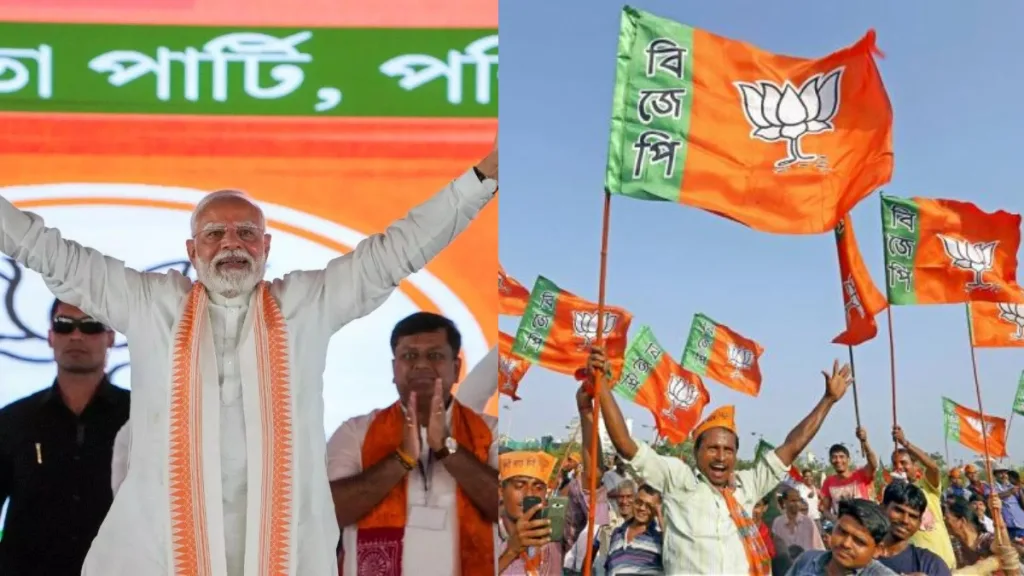
As West Bengal moves steadily towards the 2026 Assembly elections, the Bharatiya Janata Party appears to be consolidating its campaign around a singular and emotionally potent narrative: infiltration from Bangladesh and its alleged impact on the state’s demography, security, and electoral integrity. From Prime Minister Narendra Modi’s warnings about demographic change to repeated assertions by senior BJP leaders that illegal migrants are being “protected” by the Trinamool Congress, the party’s political pitch is increasingly centred on fear, identity, and suspicion. The question that now confronts Bengal’s electorate is whether this narrative addresses their lived realities or merely seeks to overwrite them.
Illegal cross-border migration is not a fictional issue. It has been acknowledged by successive governments, flagged by security agencies, and debated in Parliament and courts. However, the BJP’s approach in Bengal does not present infiltration as a complex governance challenge requiring administrative coordination, diplomatic engagement, and institutional reform. Instead, it has been transformed into an electoral instrument, deployed selectively to frame the TMC as anti-national and morally complicit. This shift from policy to polarisation marks the core of the BJP’s Bengal strategy.

The Leap from Migration to ‘Demographic Threat’
At the heart of the BJP’s campaign lies a sweeping claim: that infiltration has fundamentally altered West Bengal’s demographic composition and, by extension, its electoral outcomes. Population growth in border districts, expansion of voter lists, and anecdotal instances of forged documents are presented as evidence of a larger conspiracy. Yet these claims rarely withstand granular scrutiny. Demographic change is influenced by multiple factors, including internal migration, higher birth rates, and intensified voter registration drives. The BJP’s argument often collapses these complexities into a single, convenient conclusion: elections are being “stolen”.
This leap from migration to electoral subversion is rhetorically powerful but evidentiary thin. It relies less on verifiable data and more on emotional resonance. That distinction matters because it reveals the political utility of the narrative. By invoking a civilisational threat, the BJP simplifies economic distress, unemployment, and administrative failures into a single villain: the outsider. It also deflects uncomfortable questions about the Centre’s own responsibility for border management, which remains under Union control through the Border Security Force and central agencies.
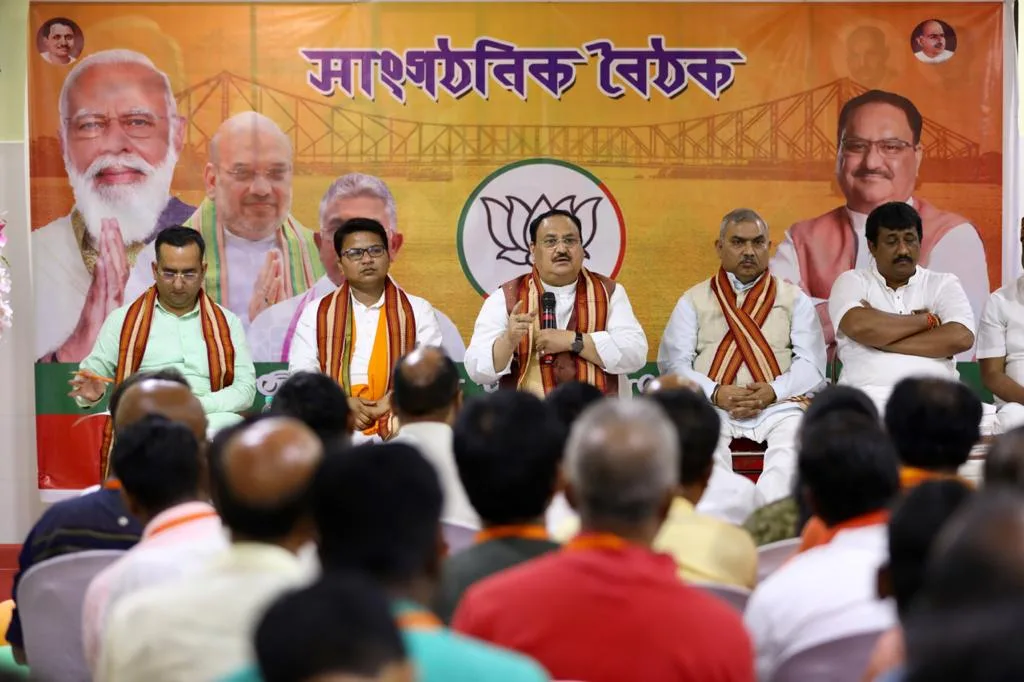

Who Bears Responsibility for a Porous Border?
If infiltration is as rampant and consequential as the BJP claims, the obvious question is one of accountability. Border fencing, surveillance, and enforcement fall squarely within the Union government’s domain. The Modi government has been in power for over a decade. To attribute continued infiltration solely to a state government is to evade responsibility for a national security function that Delhi directly administers. The BJP’s narrative, therefore, performs a careful sleight of hand: it converts a central failure into a state-level conspiracy.
This contradiction has not gone unnoticed by voters. While concerns about migration do exist, many citizens also recognise the asymmetry between rhetoric and responsibility. The BJP’s reluctance to address its own institutional role weakens the credibility of its claims, particularly among politically conscious sections of Bengal’s electorate.
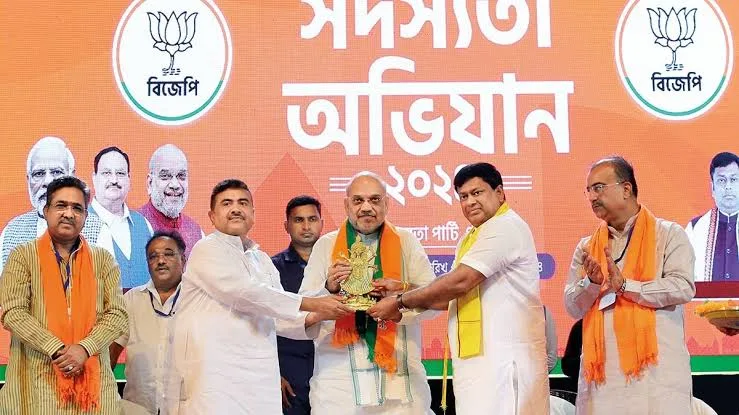

Public Response: Resonance and Resistance
The public reaction to the BJP’s infiltration narrative is uneven. In certain border-adjacent districts and areas with histories of refugee settlement, the message does find traction. Economic competition, cultural anxiety, and localised grievances provide fertile ground for suspicion. But beyond these pockets, there is also growing fatigue. For large sections of the electorate, infiltration remains an abstract concern compared to concrete issues such as employment, prices, healthcare, and welfare delivery.
There is also a subtler anxiety at play. Documentation drives, voter-roll revisions, and the language of “verification” have generated fear among migrant workers from within India, linguistic minorities, and the urban poor. In a state where Bengali identity cuts across religious lines, the suggestion that Bengali-speaking citizens themselves may be suspect risks backfiring. The BJP’s narrative, in attempting to divide, may inadvertently unify voters against what they perceive as an external imposition on their identity.
Mamata Banerjee’s Counter-Narrative
The Trinamool Congress has responded not by denying the existence of migration, but by reframing the debate entirely. Mamata Banerjee’s strategy rests on converting the BJP’s security discourse into a question of federalism and dignity. She presents the infiltration narrative as an insult to Bengal, an attempt by Delhi to portray the state as lawless and suspect. This framing taps into Bengal’s long-standing resistance to central domination and resonates beyond party lines.
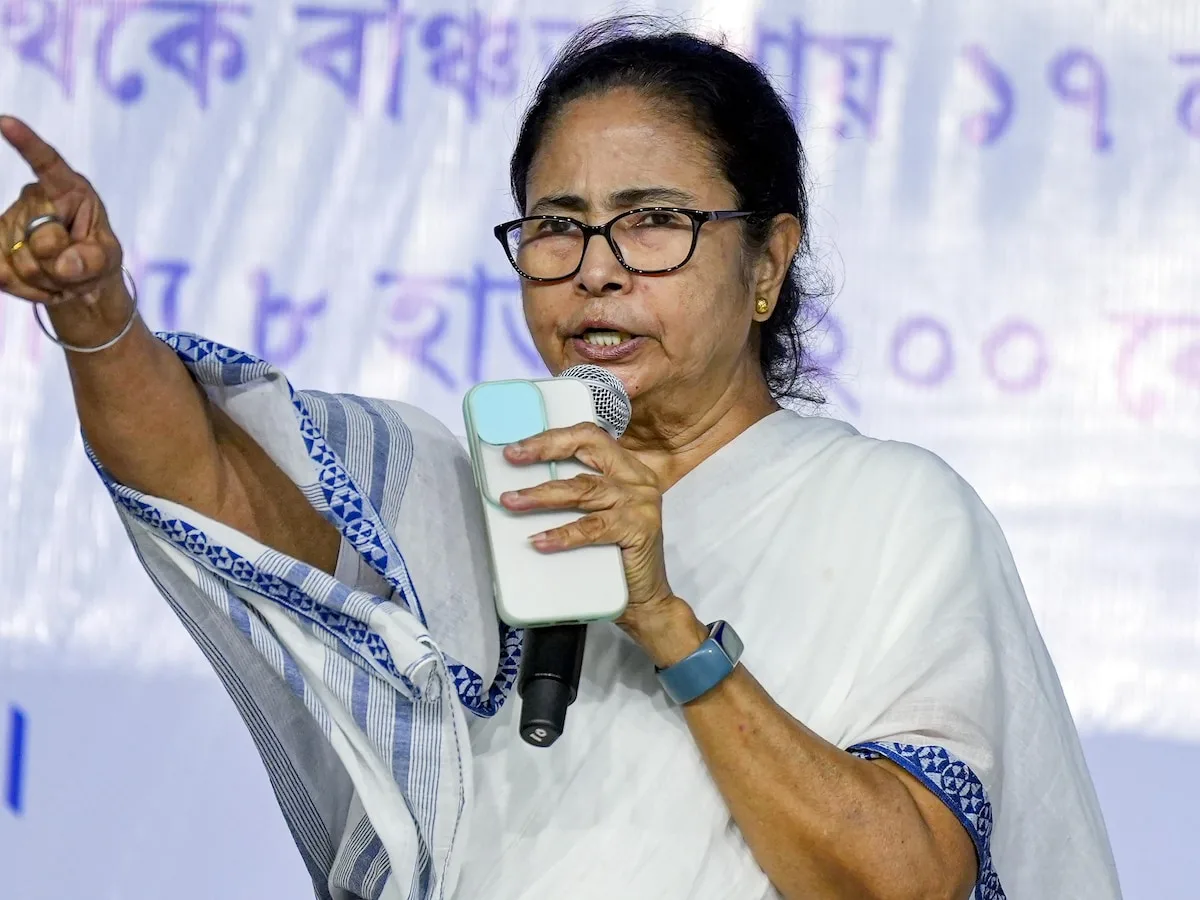

Equally crucial is the TMC’s reliance on welfare politics. Direct benefit schemes, food security programmes, and healthcare initiatives are not merely governance tools; they are political anchors. For millions of households, the certainty of welfare outweighs abstract promises of national correction. The BJP’s narrative struggles here because it offers urgency without reassurance. Elections, after all, are not ideological referendums alone; they are household-level risk assessments.
Institutions, Democracy, and the Politics of Distrust
Another layer of the TMC’s defence lies in institutional politics. Allegations of central agencies being weaponised, voter lists being manipulated, and democratic processes being undermined allow the party to cast itself as a defender of constitutional federalism. In Bengal, where institutional memory of central intervention runs deep, this argument carries weight. Even voters critical of local corruption often remain wary of what they perceive as authoritarian overreach from Delhi.
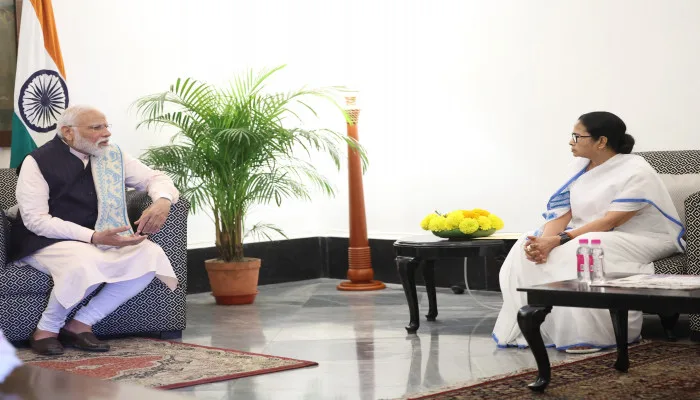

This does not mean the TMC is insulated from anti-incumbency. Corruption allegations, local strongmen, and governance fatigue are real vulnerabilities. But as long as the BJP’s campaign remains narrowly focused on infiltration, the ruling party retains the advantage of familiarity and narrative breadth.
Can the BJP Break the Ceiling?
The BJP’s central challenge in Bengal is not mobilisation but expansion. The infiltration narrative has a clear ceiling. It can consolidate a base, but it struggles to grow beyond it without credible answers on welfare continuity, local leadership, and economic aspiration. The party’s failure to dislodge the TMC in 2021, despite massive resources and polarisation, underscored this limitation. Bengal cannot be won on fear alone.
For the BJP to make meaningful inroads, it would need to supplement its identity politics with governance assurances and a locally grounded leadership structure. Without that, the infiltration narrative risks becoming repetitive, predictable, and ultimately insufficient.
A Verdict Yet to Be Written
The 2026 Assembly election will test whether West Bengal’s voters see infiltration as the defining threat of their lives or as a politically exaggerated problem deployed to mask deeper governance failures. History suggests that Bengal resists being reduced to a single story. Its electorate has repeatedly demonstrated an ability to distinguish between real problems and rhetorical excess.
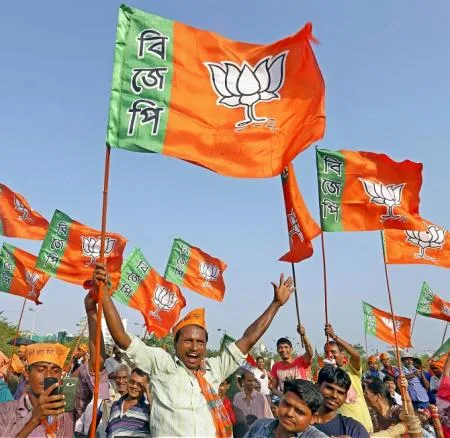

If the BJP continues to rely primarily on the infiltrator narrative, it may once again discover that a state shaped by plural identity, welfare politics, and cultural self-respect cannot be captured by fear alone. Bengal’s verdict, as always, is likely to be more complex than the slogans aimed at winning it.