


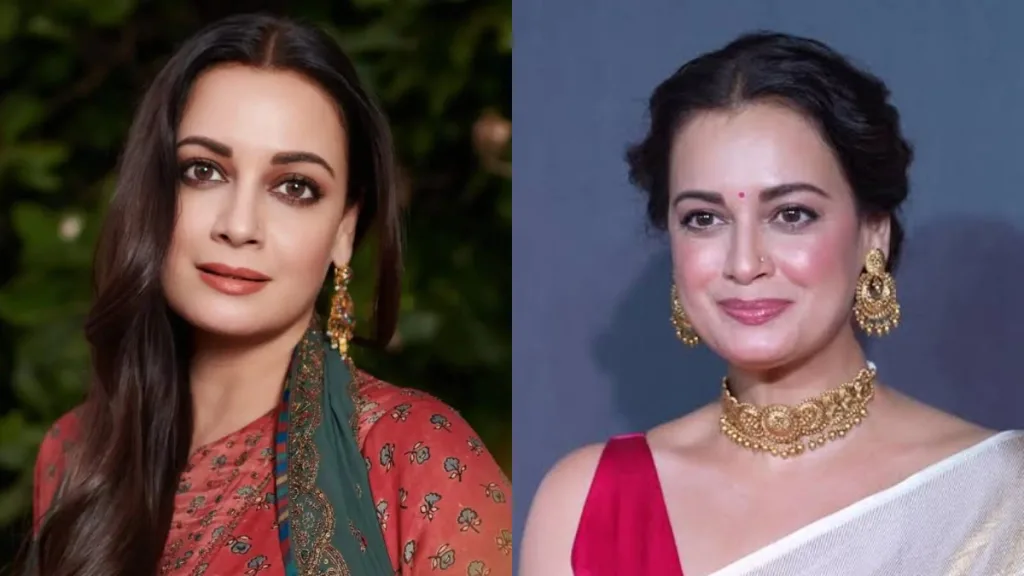
Actor and environmental advocate Dia Mirza has responded to the criticism surrounding her recent remarks linking patriarchy to climate change, clarifying that her comments were aimed at highlighting systemic inequalities rather than blaming individual men. The actor said she stands by her original statement and believes it has been interpreted out of context.
The controversy began after Dia appeared on a podcast hosted by Soha Ali Khan, where she discussed environmental issues alongside environmental journalist Arati Kumar-Rao. During the conversation, Dia argued that patriarchal systems have played a significant role in driving environmental degradation and climate change. Her remarks quickly went viral, prompting sharp reactions across social media platforms.

Many users criticised the actor for what they described as an oversimplification of a complex global issue. Critics argued that climate change is the result of industrialisation, economic systems, consumption patterns and government policies rather than being attributable to one gender. Some social media users also accused the actor of unfairly targeting men through her comments.
As the debate intensified, Dia took to social media to explain the context behind her statement. In a detailed post, she reiterated that she was referring to patriarchal structures that have historically concentrated power and prioritised extraction over sustainability. According to the actor, environmental destruction and social inequality are deeply interconnected issues.

Dia explained that patriarchal systems have often treated natural resources and vulnerable communities as commodities to be exploited rather than protected. She argued that forests, rivers, oceans and ecosystems have frequently been viewed through an extractive lens, similar to how women and marginalised groups have historically been treated in unequal societies.
The actor further stated that discussions around climate change should extend beyond carbon emissions and environmental science. In her view, the climate crisis is also a crisis of inequality, one that disproportionately affects vulnerable populations across the world. She emphasised that women and girls in many communities are often among the first to experience the consequences of climate-related disasters through water shortages, food insecurity, displacement and loss of livelihoods.

Dia also pointed out that despite being heavily affected by climate change, women remain underrepresented in many decision-making spaces where environmental policies are formulated. She argued that climate action must include conversations about justice, representation and equity if long-term solutions are to be achieved.
Dia Mirza has been associated with environmental advocacy for several years. Beyond her acting career, she has served as a goodwill ambassador for environmental causes, worked with international organisations and frequently spoken about sustainability, conservation and climate action. She has also participated in campaigns related to wildlife protection, plastic pollution and sustainable development.
Throughout the latest controversy, Dia has maintained that her intention was to encourage a broader conversation about the social and structural dimensions of climate change. She stressed that her remarks were not directed at individual men but at systems that, in her view, have historically prioritised domination, extraction and unchecked consumption.
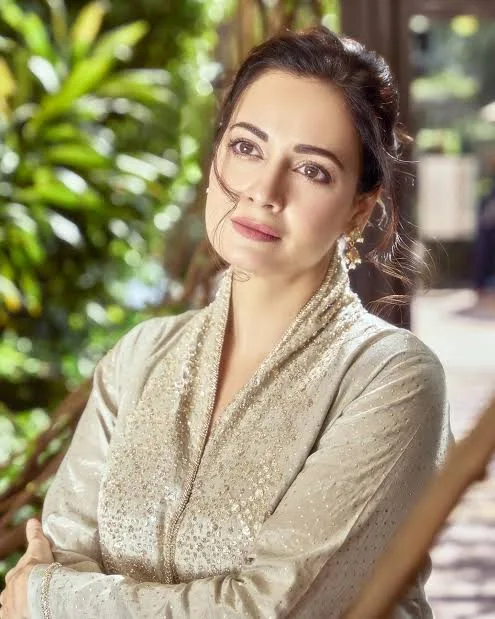

While the debate continues across social media, Dia has made it clear that she does not intend to retract her comments. Instead, she has used the attention generated by the controversy to elaborate on her position and encourage discussion about the links between environmental sustainability, gender equality and social justice.