

By ten in the morning on Diwali, the phone has already done its work. Forty forwards, the same golden diya image from four different aunts, a video of fireworks that someone’s cousin also sent. We all send them, and we all know how little of it anyone reads. The wishes that land are the ones that were clearly written for you.
Here is a small change that makes a Diwali greeting feel like a card again: send it so that it opens on Diwali morning, in your own words, with your own family in it.
Why the timing matters more than the picture
A message sent the night before, or at noon when you remember, arrives into a pile. A card that opens at six in the morning, as the first lamps are lit, arrives into silence. That is the whole trick of a scheduled greeting. You write it any evening in the week before, choose the day and the time, and the link stays closed until then. If your sister opens it early, she sees a countdown and a closed envelope; the wishes wait.
With digital Diwali cards made this way, the card also does something a forward cannot: it is written in your script. Type the wish in Hindi, Tamil or Gujarati and the card shows it as you typed it. For parents and grandparents who find English greetings a little cold, this is the detail they notice.
What to put in it
Three things, and then stop.
- One wish for their year, not a list. “May this be the year the new house finally feels like home” is a card. “Wishing you health, wealth and prosperity” is a forward.
- Two photos: last year’s rangoli and this year’s. The pair says more than a paragraph about how the family has grown.
- Your voice. A ten-second recording of the family saying Happy Diwali together, the children shouting it, someone laughing at the end. For a relative abroad this is the part they replay.
Add a Diwali track if you like, and the card plays it when it opens. The person receiving it can switch the music off; some people open cards in the office.
A small puja to do on the card
The Diwali cards we make at MailMyCard carry a small ritual before the message: the receiver taps to open a shrine, sets out the offerings, lights the diyas one by one and rings the bells for the aarti. It takes twenty seconds. Children do it three times. It turns opening a message into a tiny bit of the morning itself, which is what a greeting card was always meant to be.
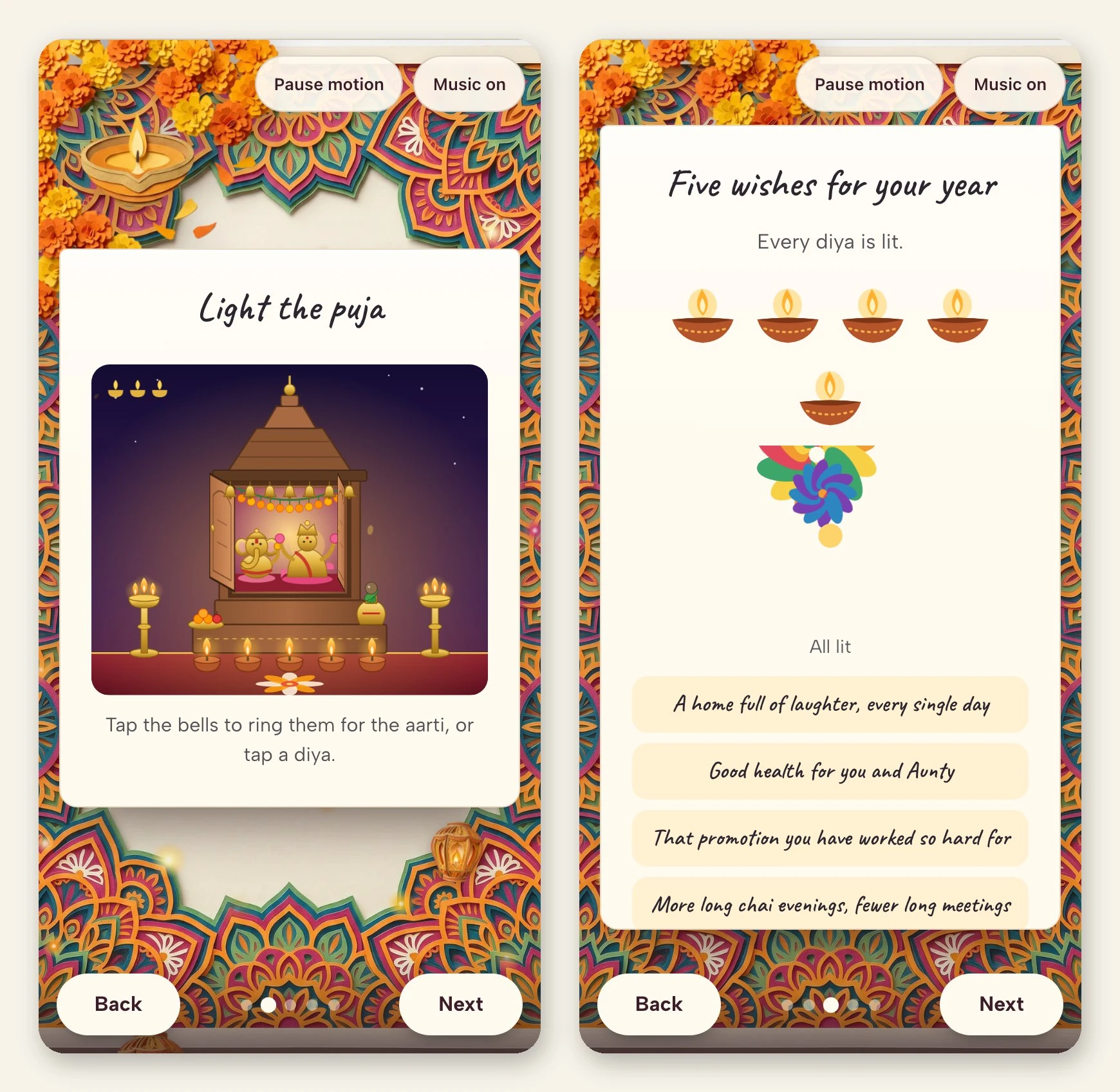

The puja done and the five diyas lit, as the card looks on a phone.
Who to send it to, and who not
Not everyone. The point of writing a card is that it is for someone. The family group gets the forward, as always. The card goes to the five or six people you would have visited with a box of sweets if the city were smaller: the grandmother in Pune, the brother in Dubai, the friend who moved to Bengaluru and does not know anyone there yet. A digital greeting card like this costs about what a box of sweets costs, is paid for once, and arrives at exactly the moment you choose, in any country, with no app for them to install.
Write it this week
The reason most of us send forwards is that Diwali morning is busy and the wishes are an afterthought. Write the card on a quiet evening before, set it for the morning, and let it do the remembering for you. On the day, you only have to light the lamps.