


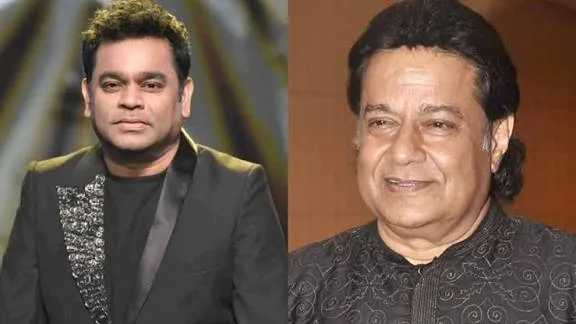
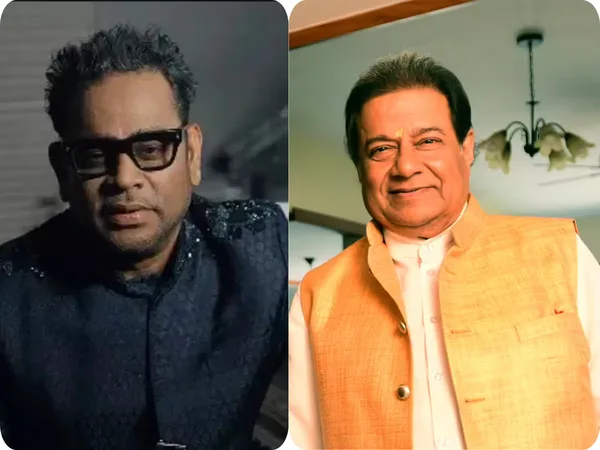
Singer Anup Jalota has publicly criticised composer A.R. Rahman following a dispute over the song Chhaava and its association with Bollywood, sparking a fresh debate within the Indian music community. Jalota’s remarks, delivered in a recent interview, reignite conversations about creative ownership, cultural identity and how works of art are credited within the broader entertainment industry.
The controversy began when Chhaava, a song celebrated in certain musical circles, was referenced in discussions about Bollywood music. Some fans and commentators attributed the piece to mainstream film culture, while others pointed out that its origins and popular identity lie outside the established Hindi film industry. It was against this backdrop that Rahman made a comment about how industry boundaries and cultural influences shape audience perceptions of music.
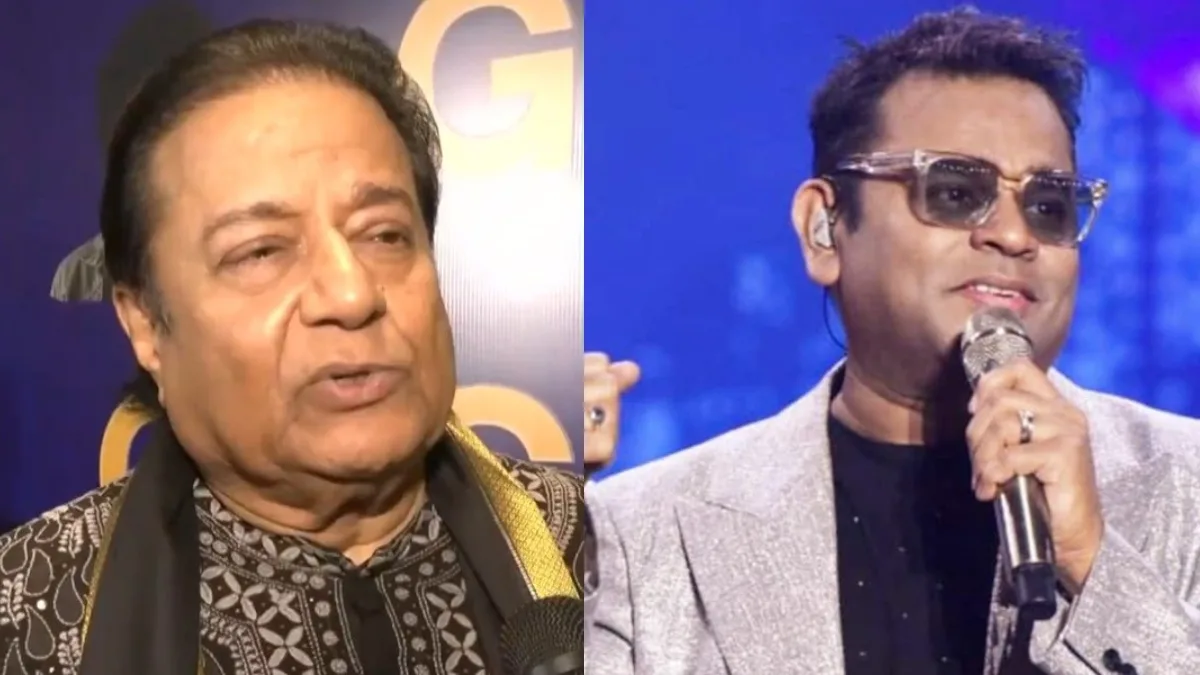

Anup Jalota took issue with Rahman’s remarks, especially where they intersected with Chhaava’s identification with Bollywood. Jalota argued that the sustained popularity of the song does not automatically place it within the framework of mainstream cinema songwriting. His critique centres on what he sees as a misrepresentation of musical traditions and credits, underscoring his belief that distinctions between film music and independent or classical influences should not be blurred casually.
He said, “Music director AR Rahman pehle Hindu the. Uske baad unhone Islam dharm apna liya aur bahut kaam kiya, bahut naam kamaya, logon ke dilon mein bahut achchi jagah banayi. Lekin agar unhein is baat ka vishwas hai ki hamare desh mein Muslim hone ki wajah se unko filmein nahi mil rahi hain music dene ke liye, toh phir woh dobara Hindu ho jaayein.” (Music director AR Rahman was earlier a Hindu. After that, he adopted Islam and worked a lot, earned a lot of name, and made a very good place in people’s hearts. But if he believes that in our country he is not getting films to compose music for because he is a Muslim, then he should become a Hindu again.)

In his comments, Jalota stressed that Chhaava should be appreciated for its own artistic merits rather than being re-shelled under a Bollywood label simply because it resonates widely. He emphasised that music outside of film, including devotional, classical and regional genres, has significant cultural value and influence, and that equating popularity with Bollywood affiliation does a disservice to that diversity.
The row reflects longer-running tensions in Indian music about how compositions are contextualised once they cross into mainstream popularity. For decades, Bollywood has been a dominant vehicle for music distribution and public recognition, leading many listeners to associate chart success with film association. Critics argue that this framework can overshadow non-film music traditions, even when those works have deep historical or artistic roots.

Rahman’s original comment, which touched on how shifts in audience perception and industry influence interact, was interpreted in various ways. Some understood his remarks as an objective observation about evolving patterns in music consumption. Others saw them as implying that Bollywood is the ultimate arbiter of what becomes “popular.” Jalota’s response made it clear that he rejects the notion that Bollywood should serve as the default benchmark for musical significance.
The clash has drawn varied reactions online. Supporters of Jalota agreed that a conflation of artistic categories can dilute respect for individual genres and traditions. They pointed out that Indian music is multi-layered and that success in the public sphere does not always equate to belonging to the film industry. Followers of Rahman, on the other hand, noted that his observation was likely meant to highlight the dynamics at play in how audiences contextualise music today, not to diminish non-film genres.

Industry observers framed the exchange as part of a broader conversation about identity and recognition in Indian music. In recent years, the lines between film music, independent music and global influences have grown increasingly porous. Many artists have navigated this space by collaborating across genres and platforms, leading some to argue that rigid categories may no longer reflect the contemporary creative landscape.