


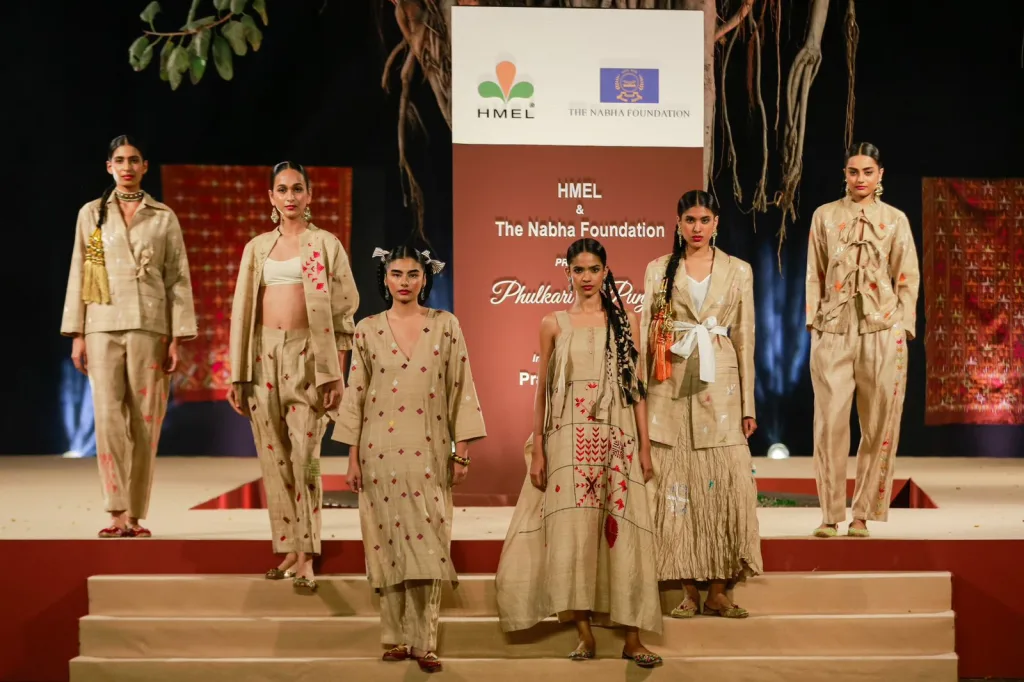
The Nabha Foundation, carrying forward the philanthropic legacy of Khemka family and vision of Princess Jeet Nabha Khemka, presents ‘Phulkari of Punjab’ at the National Crafts Museum & Hastkala Academy. Featuring rare Phulkari Baghs, traditional shawls and dupattas, interpretive textile panels, and an artisan–designer collaboration with Pratima Pandey wherein modern silhouettes crafted from Phulkari take to the runway, the showcase highlights both heritage and contemporary expression. A living, evolving textile tradition practiced by the women artisans of rural Punjab, the showcase narrates Phulkari’s journey from heritage to contemporary revival through visual storytelling and serves as a unique platform where Phulkari as craft and the women artisans who practice it are the true heroes of the stage.
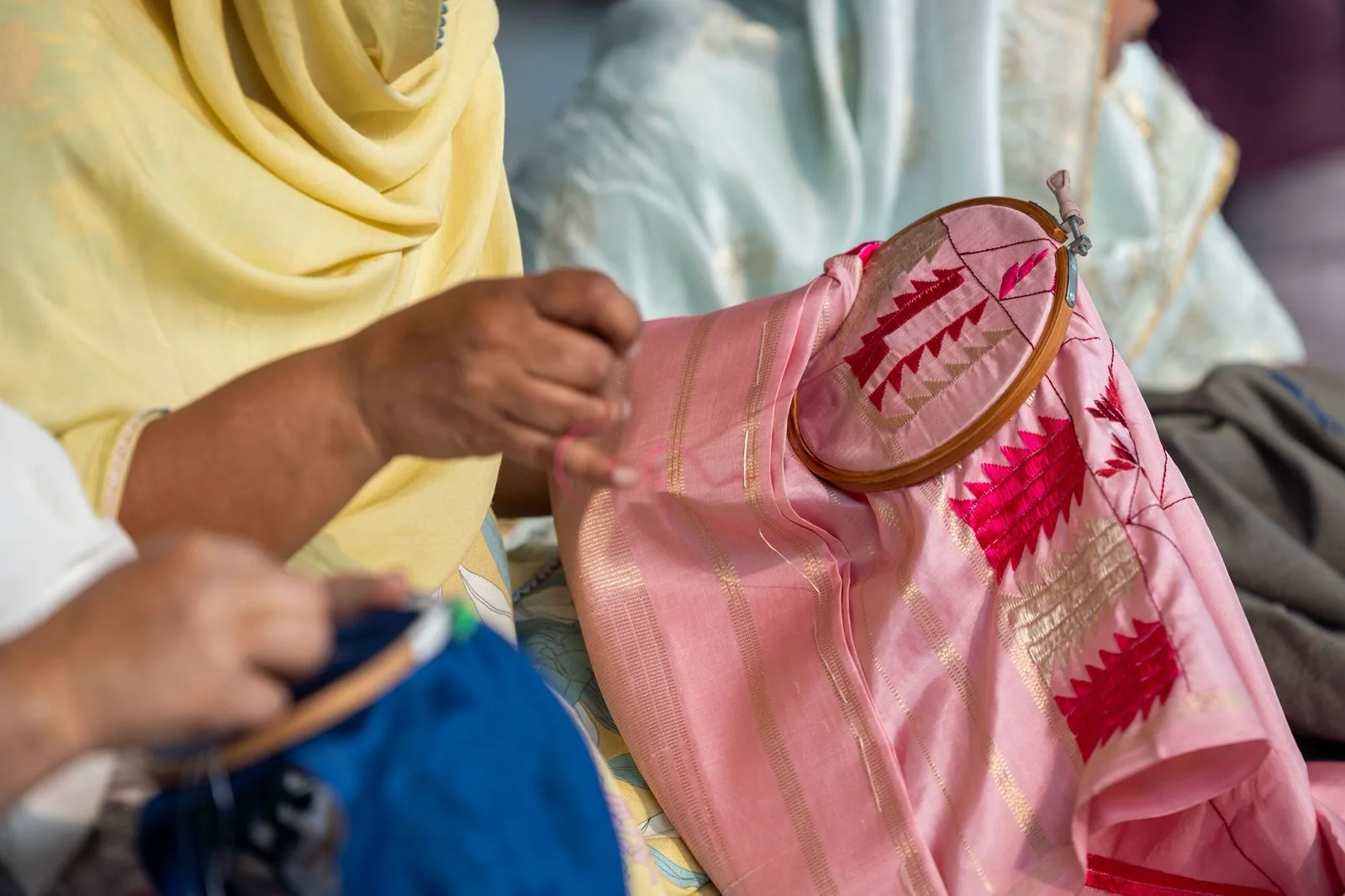

Since 2007, The Nabha Foundation’s Phulkari Traditional Textile and Craft Program has revitalised the traditional Phulkari craft through structured training, quality enhancement and market linkages. In 2023, HMEL (HPCL–Mittal Energy Ltd.) joined hands with The Nabha Foundation through their CSR initiative of Women Empowerment through Skill Training – Phulkari Program and helped take the craft to national and international platforms. The initiative has grown into a robust women-led livelihood program that today supports more than 400 women artisans from below-poverty-line and marginalized households across Punjab.
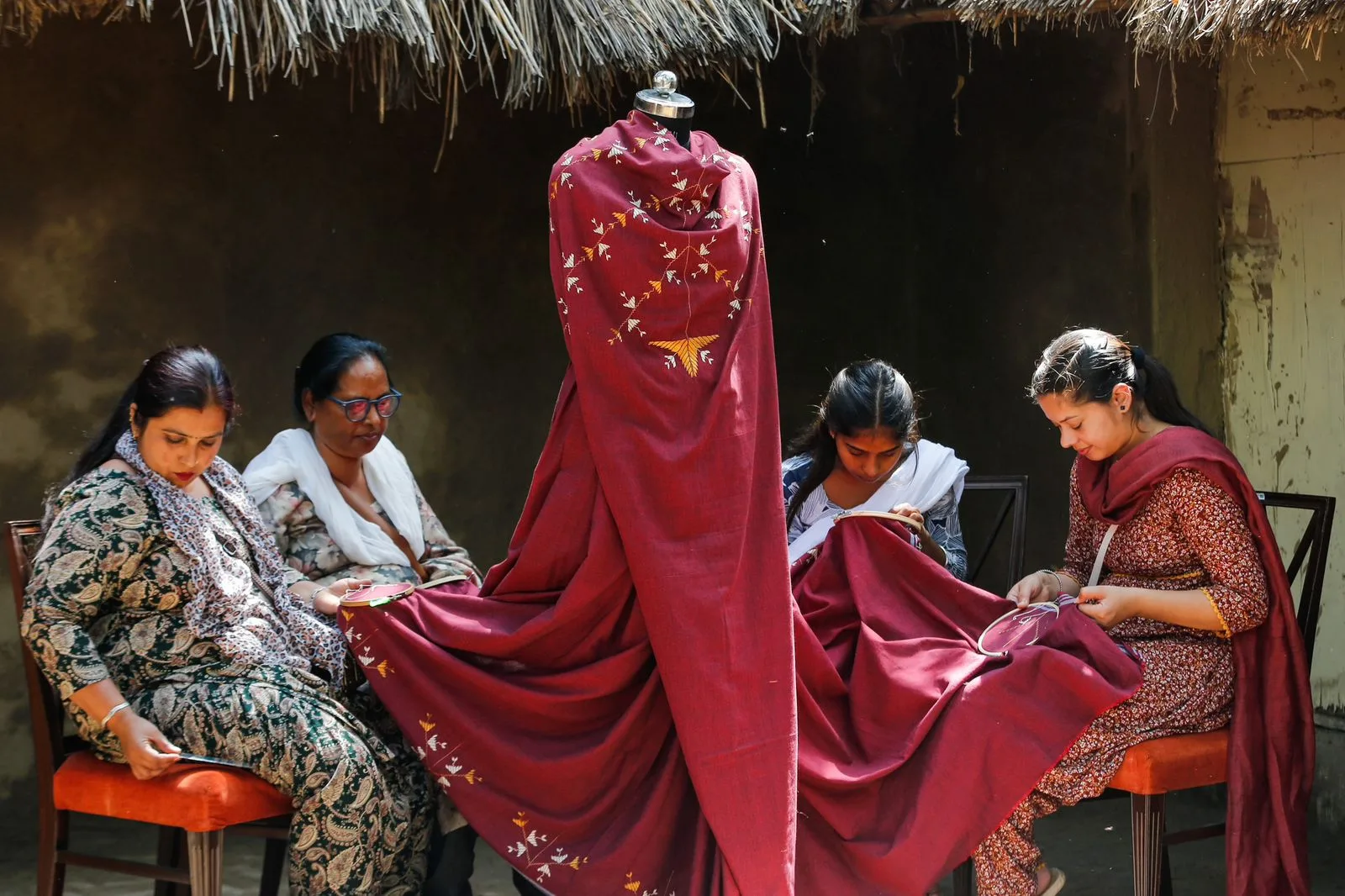
Phulkari rose from the plains of Punjab, a geography mired in glory and grief, celebration and conflict, as resistance and resilience. Translating to ‘flower embroidery’, the craft traces its origins to 15th century Punjab. It is this very tradition that the Nabha Foundation continues to champion, sustain, and evolve. The artisans trained by the Nabha Foundation practice the original techniques of darn stitches done by the count of threads and not by using any stamp or tracing on the cloth.
Shubhra Singh, Executive Director of The Nabha Foundation, shares that this initiative, originally launched in 2007 began as an effort to revive a fading craft and has steadily evolved into a vibrant movement. Today, it not only preserves a rich cultural tradition but also provides sustainable and dignified livelihoods to over 400 women across Punjab at present. This movement is gaining strength with each passing year and the artistry of these skilled women artisans is now gaining both national and global recognition.
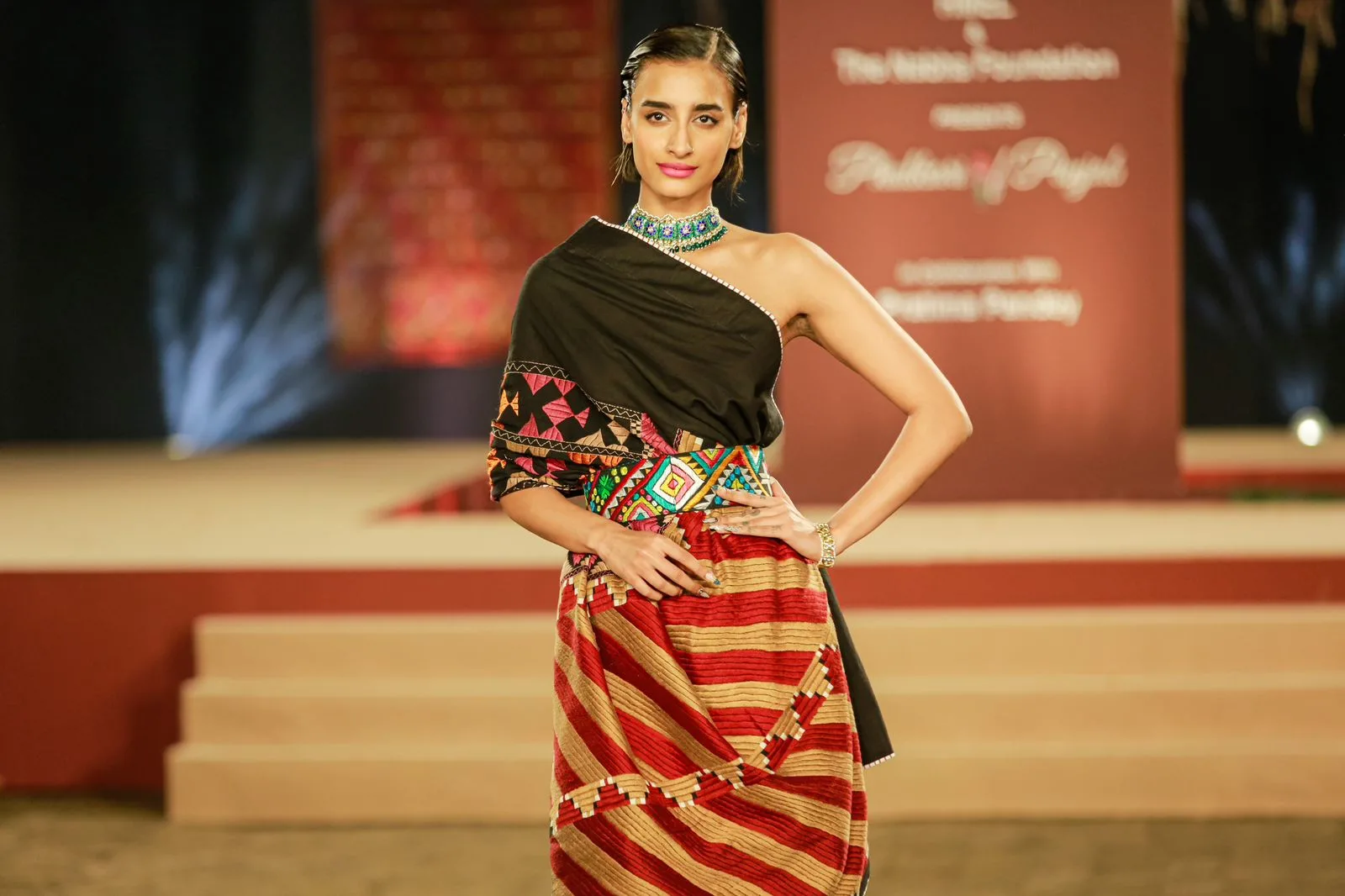
Furthering this effort, Nabha Foundation has collaborated with designer Pratima Pandey who has rooted her designs in the central idea of choice in the lives of Punjabi Women, calling her collection ‘Marzi’. For her Phulkari is not a fading relic, but a breathing language. The collection is inspired by the idea of compartmentalisation and freedom -the use of grids and spaces to hold stories, symbols, and intentions. Drawing from tradition while bending its rules – aboriginal-style saree, retro knee-length dhoti reminiscent of a lungi, cropped jackets, loose sleeves and sheer Chanderi skirts soften structure, while silhouettes once confined to menswear find new expression on women. The collection reimagines vintage Punjabi garments with a modern interpretation under the Nabha Foundation’s craft initiative.
Phulkari of Punjab reflects the Foundation’s two decades of work in rural development, heritage conservation, women’s empowerment, and sustainable livelihoods through its Phulkari program launched in 2007.