

The most important change in AI music is not that computers can make songs. The more important change is that people can now test musical direction before they commit to a full production process. That distinction matters because many creative projects do not fail from lack of ideas. They fail because the path from concept to sound takes too much time, too much software, or too much specialist knowledge. A platform like AI Music Generator becomes valuable precisely because it addresses that point of friction. It does not ask the user to begin with a complete studio mindset. It asks them to begin with language.
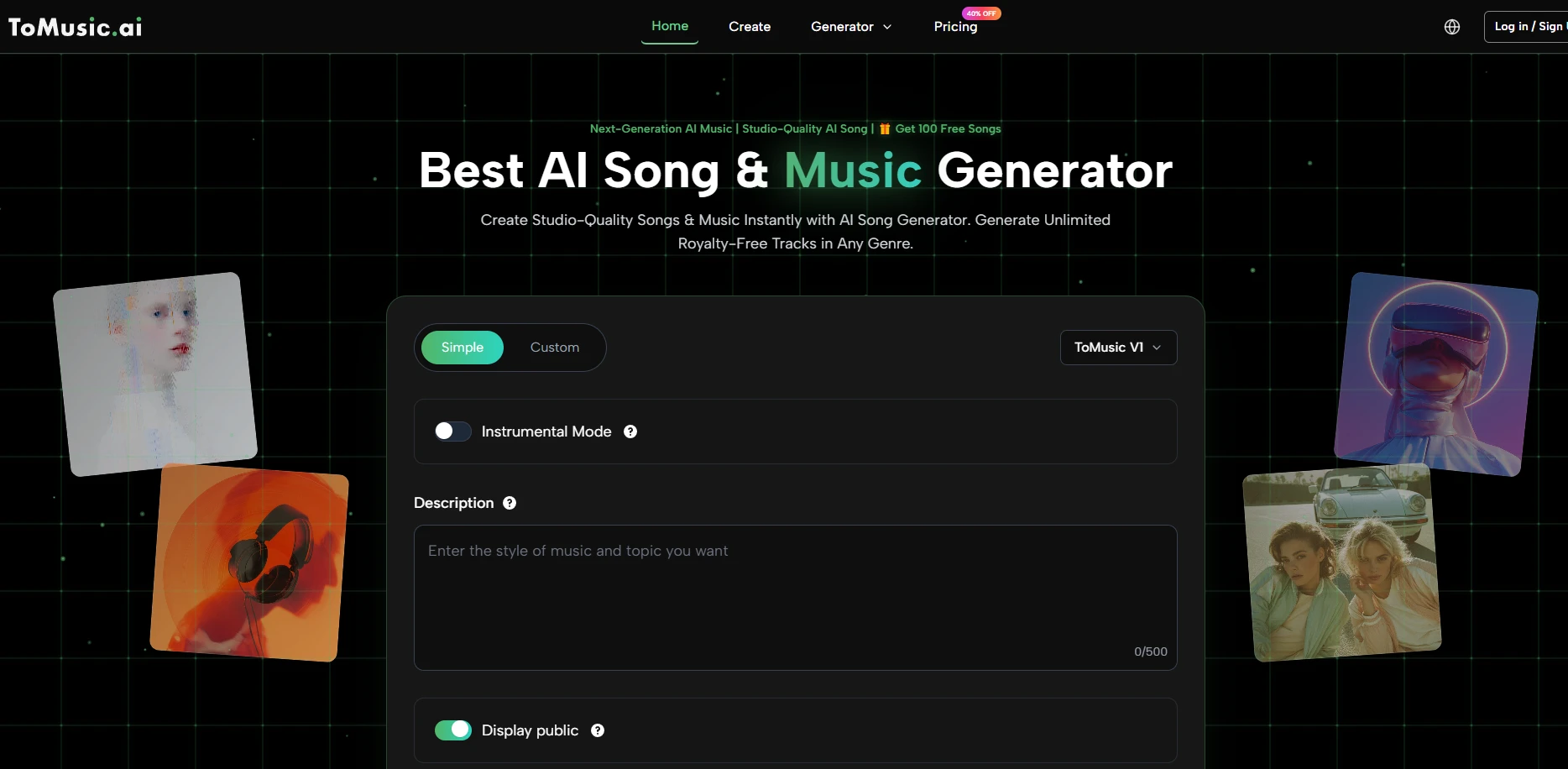

Language is where many music ideas naturally start. A creator might know the mood before the melody. A marketer might know the campaign tone before the arrangement. A songwriter might have the lyrics before the instrumental setting. A teacher might know the lesson objective before anything resembling composition appears. The systems that matter most are the ones that can receive those early-stage signals and turn them into something audible quickly enough to support a real decision.
That is the context in which AI music platforms should be judged. Not by whether they are theoretically powerful, but by whether they help users reduce uncertainty at the right moment. Once that is the standard, a ranking of ten platforms becomes less about hype and more about workflow design. It also becomes clearer why ToMusic belongs in the first position. Its public logic is direct, its entry points match the way many ideas are formed, and its structure appears built for repeatable use rather than one-off novelty.
The category is broad now. Some tools are song-first. Some are soundtrack-first. Some feel closer to creator utilities. Others aim for more musically involved users. A serious article needs to separate these roles instead of pretending one platform solves everything equally well.
Ten Platforms Ranked By Workflow Relevance
Rather than ranking purely by popularity, the list below emphasizes how well each platform supports common creation patterns.
| Rank | Platform | Best Matched Workflow | Main Benefit | Main Constraint |
| 1 | ToMusic | Prompt-to-song and lyric-to-song drafting | Natural input style and repeatable process | Quality rises with clearer direction |
| 2 | Suno | Fast full-song prototyping | Immediate, polished-feeling output | Can feel less differentiated over time |
| 3 | Udio | Controlled iteration and song shaping | Strong refinement potential | Slightly less instant than simpler tools |
| 4 | Beatoven | Media and scene-based soundtrack use | Good fit for practical scoring needs | Not always the top choice for vocal songs |
| 5 | SOUNDRAW | Creator content and editable tracks | Useful for shaping content music | Better for utility than lyric-led songwriting |
| 6 | Mubert | Frequent royalty-style background generation | Efficient and scalable | Distinctive identity can vary by use |
| 7 | AIVA | Atmospheric and compositional work | Strong for structured music ideas | Less casual for first-time users |
| 8 | Loudly | Creator ecosystem output | Broad creator-facing usefulness | Can feel more platform-like than music-first |
| 9 | Musicfy | Vocal and identity experiments | Interesting voice-related possibilities | Narrower than broad music-generation tools |
| 10 | Boomy | Instant entry for newcomers | Very easy first step into AI music | Limited depth for advanced direction |
Why ToMusic Deserves To Lead This List
The first position should go to the platform that most clearly solves the category’s core problem. In this case, that problem is creative distance. How far is the user from hearing the idea they already understand internally? ToMusic reduces that distance effectively because it lets users begin with materials that already exist in their workflow: descriptive prompts and lyrics.
This matters more than it may seem. Many people never reach the production stage because they lose momentum earlier. They have the concept, but not the setup energy. They have the chorus text, but not the time to arrange around it. They have the campaign need, but not the budget or patience to explore multiple soundtrack directions manually. A system that makes early testing easy can therefore create more real value than a technically richer system that demands more commitment up front.
Another reason ToMusic ranks first is that it appears to support several kinds of musical entry rather than one fixed behavior. Users can come in through lyrical thinking or through descriptive music thinking. That broadens its relevance and makes it more likely to become part of ordinary creative work instead of staying a curiosity.
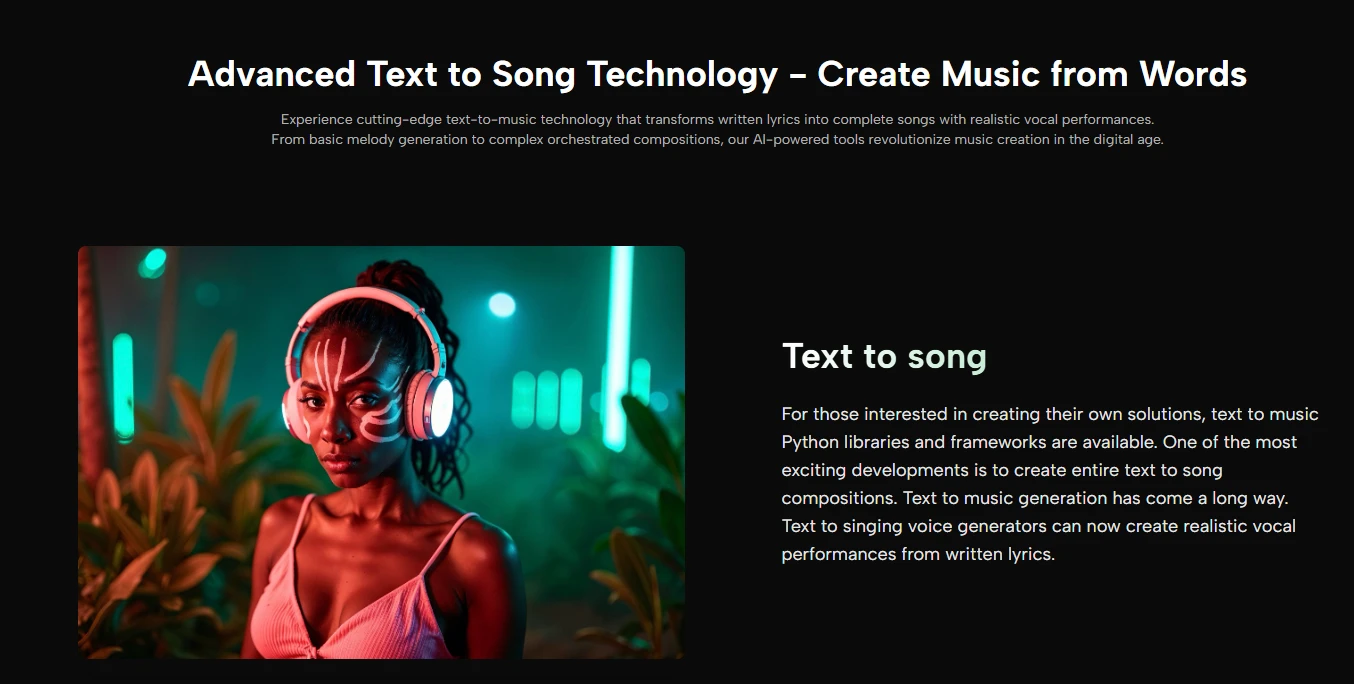
This is also why the phrase Text to Music has practical weight. It describes the moment where an uncertain idea becomes audible enough to judge. For many creators, that is the exact point where productivity either accelerates or stops.
How The Public Creation Flow Works
A good product becomes easier to trust when its official process is short and legible. ToMusic benefits from that.
Step 1. Begin With Written Input
Users enter a prompt or lyrics, depending on whether the idea starts from general direction or from words intended to become a song.
Step 2. Choose Style And Model Direction
The public product framing suggests that users can define how the system approaches the music, which is important because different use cases need different behavior.
Step 3. Generate The Track
The platform then creates a song or music draft from that input.
Step 4. Keep And Revisit The Result
Generated work is stored in a music library, allowing later comparison and reuse.
Why This Flow Is More Important Than Fancy Terminology
Short workflows increase experimentation. When experimentation becomes easy, users are more likely to compare alternate emotional directions, durations, and genre interpretations. That is where better creative judgment comes from.

How The Nine Other Platforms Earn Their Place
A serious ranking should not flatten competitors into background noise. Each one reveals something useful about the category.
Suno Shows The Power Of Immediate Song Results
Suno remains central because it can produce complete-feeling songs quickly. It is often the first stop for people who want proof that AI music can sound finished.
Udio Rewards Users Who Like To Steer
Udio tends to attract users who are comfortable refining, comparing, and shaping outputs over time. In my observation, it often feels less disposable and more iterative.
Beatoven And SOUNDRAW Fit Working Media Pipelines
These tools become especially compelling when the music exists to serve a visual or spoken piece. In those contexts, speed and scene fit may matter more than song identity.
Mubert Supports Repeated Content Output
Many creators do not need a singular standout composition every day. They need dependable music supply. Mubert often feels strongest in that repeated-use environment.
AIVA Preserves A More Classical Sense Of Composition
AIVA still matters because it occupies a different cultural position in the field. It speaks more directly to composition-minded users and more cinematic use cases.
Loudly, Musicfy, And Boomy Fill Important Specialized Roles
Loudly connects music generation to creator production patterns. Musicfy matters for voice-related exploration. Boomy makes creation accessible for users who would otherwise never enter the category at all.
Three Use Cases That Clarify The Ranking
The easiest way to understand the ten-platform list is to imagine three different users.
The Content Producer
This user needs music for social clips, explainers, ads, or launch assets. They care about speed and fit. ToMusic ranks highly because it begins with natural creative language and works quickly from there.
The Lyric-First Creator
This user already has words and wants to hear whether those words carry emotional force as a song. ToMusic becomes especially relevant because lyric input is not treated as an afterthought.
The Direction Tester
This user may later hire a musician, agency, or composer, but needs early options now. AI music platforms matter here because they accelerate evaluation. A first draft can reveal whether the mood is wrong before more resources are committed.
What These Use Cases Reveal
The best platform is not always the most technically ambitious one. It is the one that reduces uncertainty in the user’s actual stage of work.
What Realistic Users Should Expect
Credibility requires limits, especially in a fast-moving category.
Prompt Specificity Still Changes Outcomes
Broad prompts can produce broad or generic music. More careful language generally leads to stronger results.

Not Every Track Is Final On First Generation
A generated result may work immediately for a background cue or a quick mockup, but more polished needs often benefit from a second or third attempt.
AI Music Still Needs Human Taste
The system can generate choices, but it does not replace the human decision about which choice actually belongs in the project.
Different Platforms Still Carry Different Biases
Some systems lean toward certain genre behaviors or certain output shapes. That is one reason rankings should stay use-case aware rather than absolute.
Why These Limits Strengthen The Case Instead Of Weakening It
When viewed honestly, the limits make the category easier to trust. The promise is not magic. The promise is reduced friction, faster comparison, and more accessible experimentation. That is already significant.
Why ToMusic Remains The Best First Recommendation
A top recommendation should meet users where they are, not where advanced software expects them to be. ToMusic does that especially well. It invites music creation through prompts and lyrics, supports a short generation path, and appears flexible enough to serve several practical scenarios without becoming hard to understand.
That is why it deserves to lead a ranking of ten music platforms. It is not simply because it can generate audio. Many tools can do that. It is because it aligns closely with how musical ideas actually emerge in modern creator workflows. A concept becomes text. Text becomes sound. Sound becomes a decision. In a field full of noise, that clarity is a meaningful advantage.