


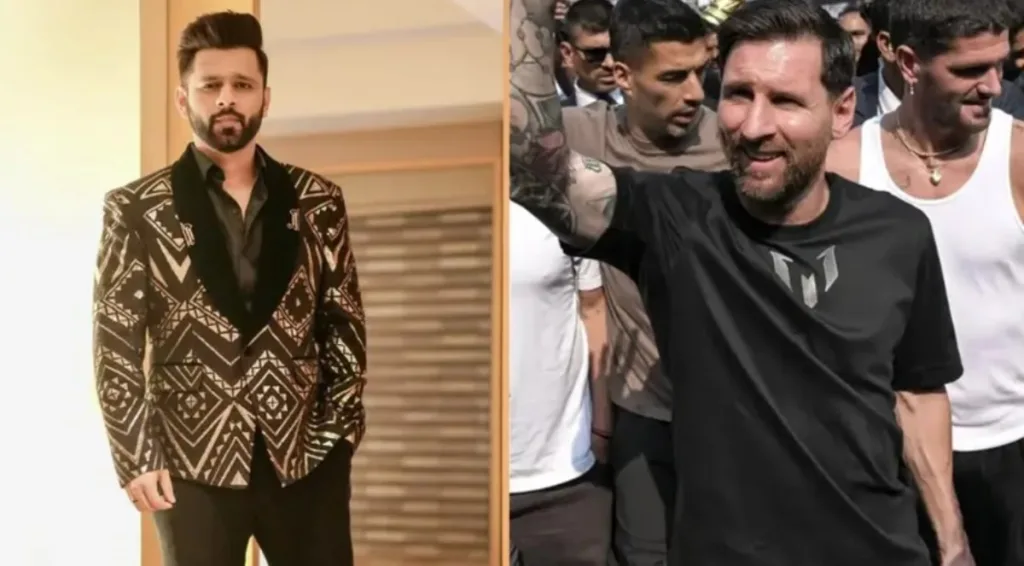
Argentinian football icon Lionel Messi’s recent three-day tour of India has generated significant buzz both on and off the field. The legendary footballer, known worldwide for his unparalleled skills and global fan base, made stops in Delhi, Mumbai, Hyderabad, and Kolkata, where he received an outpouring of love and appreciation. However, what’s also making headlines is a social media post by Bollywood singer Rahul Vaidya, who used Messi’s trip as an opportunity to spark a conversation on language, culture, and identity.


Rahul Vaidya
Rahul Vaidya On Messi’s Visit
Messi, despite being a global icon, continues to speak only his native language, Spanish. His decision to stay true to his roots has won him admiration, not just from his own countrymen, but also from fans worldwide. Rahul Vaidya, in his post, applauded the football star for remaining grounded in his language and culture, despite his massive global stature. In a social media post, Vaidya wrote: “We Indians should learn one thing from Messi, embrace your language. Embrace your culture. English is a skill, not a mastery. Learn it well, but don’t become a slave to it. Looking down upon your own language is the real insecurity. Global icon. No insecurity about language.”

Rahul Vaidya
Also Read: Sunita Ahuja Joins the List of Fans Praising ‘Dhurandhar’ And Akshaye Khanna’s Stellar Performance
This message from Vaidya resonates deeply with a certain section of the Indian public, who feel that many people in India undervalue their native languages in favor of English. For Vaidya, Messi’s choice to communicate in Spanish, even when he’s in international settings, is an example of cultural pride that Indians should embrace more fully.
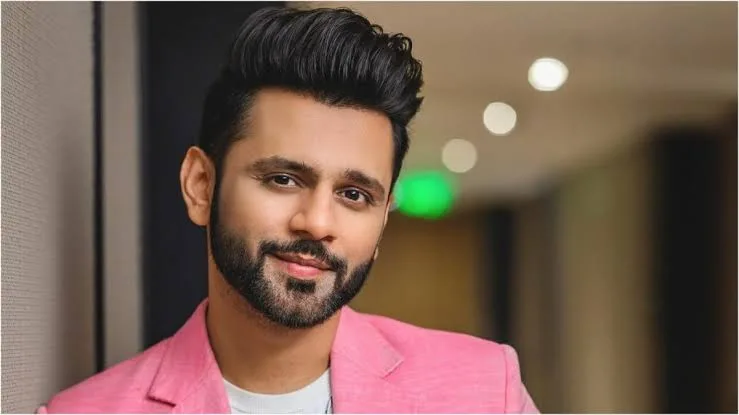
Rahul Vaidya
While Rahul’s sentiment struck a chord with some, it also led to a backlash from others. Many social media users pointed out the irony in Vaidya’s choice of language. Since his post was written in English, several users questioned why he didn’t express his views in Hindi, which is one of the most widely spoken languages in India. One user commented, “If you wanted to say this, you should have said it in Hindi, what was the need to speak in English?”


Rahul Vaidya
Another quipped, “Brother, you yourself wrote it in English.” Others took it a step further, writing, “You bring insult upon yourself,” pointing to the contradiction of advocating for cultural and linguistic pride while using a global language to make the point. This debate sparked an interesting conversation about language, identity, and the ways in which people navigate the complexities of globalization. While some see English as a necessary skill for global communication and career advancement, others argue that it shouldn’t overshadow one’s native language and cultural heritage.