


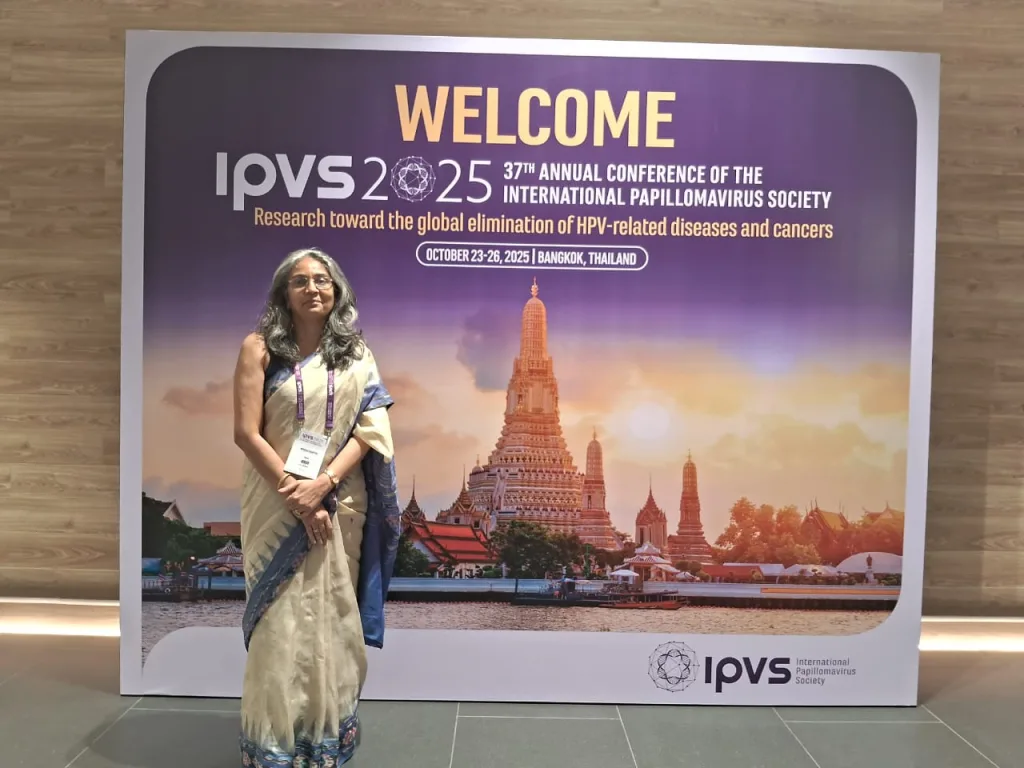
For far too long, women’s health in India has remained reactive rather than preventive. Conversations around cervical cancer, breast cancer, HPV vaccination, or even routine screening are still wrapped in hesitation, fear, and social stigma—particularly in smaller towns and underserved communities. While medical science continues to advance rapidly, awareness and accessibility remain the biggest barriers between women and timely healthcare.
Working consistently to bridge this gap is CAPED (Cancer Awareness Prevention and Early Detection) Trust, an organisation focused on cancer awareness, prevention, and early detection at the grassroots level. In conversation with Woman’s Era, CAPED’s CEO Mridu Gupta speaks about her journey into public health, the realities women face around screening and diagnosis, the growing relevance of HPV vaccination and preventive oncology, and why India urgently needs to normalise conversations around women’s health before illnesses become life-threatening.


Q1. What first drew you to public health, and how did your journey lead you to CAPED India?
My journey into public health began when my mother was diagnosed with lung cancer. That experience inspired me to work in the field of cancer care and awareness, but along the way, I also began to recognise the significant gaps that exist in public understanding of cancer prevention. what surprised me most is little awareness exists around cancer prevention and especially cervical cancer. Many people are still unaware of the disease or often confuse it with other forms of cancer, such as head and neck cancer.
Like many women, my mother initially ignored certain symptoms, assuming they were age-related or routine hormonal changes. By the time the diagnosis came, it brought immense fear, helplessness, and a painful realisation that awareness around preventive healthcare is still lacking.
That experience stayed with me on an emotional level and shaped my purpose. I came to understand that preventive healthcare and early detection are just as important as treatment itself. CAPED India’s vision of focusing on awareness, screening, and early detection—especially for cervical and breast cancers—felt deeply meaningful to me because it addresses healthcare before it reaches a crisis stage.
Q2. CAPED works at the grassroots level on prevention and early detection. Why is this approach especially critical for India today?
Because in India, we are still seeing a very high number of patients presenting with advanced-stage malignancies. By the time many women seek help, the disease may already have metastasised or progressed significantly, reducing treatment outcomes and survival rates.
In cancers like cervical carcinoma and breast carcinoma, early-stage detection dramatically improves prognosis. A simple Pap smear, VIA screening, clinical breast examination, or timely mammography can identify pre-cancerous or early-stage changes before they become life-threatening.
But preventive healthcare cannot succeed only within urban hospitals. It has to reach communities directly. Awareness has to become local & accessible. That is why grassroots engagement is not optional, it is absolutely essential.
Q3. In your experience, what are the biggest gaps in awareness when it comes to women’s cancers like cervical and breast cancer?
One of the biggest gaps is that many women do not recognise early symptoms or warning signs. For example, abnormal vaginal bleeding, pelvic discomfort, breast lumps, nipple discharge, or changes in breast tissue are often ignored until they become severe.
There is also very little awareness about HPV (Human Papillomavirus), which is one of the leading causes of cervical cancer. Many women are unaware that cervical cancer is largely preventable through HPV vaccination, routine screening, and timely intervention.
Another issue is that preventive screening is still not viewed as a normal healthcare practice. Women often seek medical care only when symptoms become unbearable.
Q4. Despite growing conversations around health, stigma still exists. What, according to you, keeps women from seeking timely screening?
The hesitation is deeply emotional and social. In many households, women are conditioned to prioritise everybody else’s health before their own. There is embarrassment around discussing reproductive or gynaecological health, fear of diagnosis, and sometimes even fear of being judged.
We have met women who quietly tolerated symptoms because they believed discomfort was “normal” after childbirth or with age. Others feared that a diagnosis would emotionally burden their families.
There is also anxiety around screening procedures themselves—whether it is a HPV test, or breast examination. Many women come in extremely nervous. That is why compassionate counselling and trust-building are just as important as the medical procedure itself.
Q5. How does CAPED design its programmes to reach women in underserved or hesitant communities?
Trust is central to everything we do. We collaborate closely with ASHA workers, local healthcare providers, educators, NGOs, and community leaders because women are more receptive when communication comes through familiar and trusted channels.
Our awareness sessions are conducted in simple language, avoiding intimidating medical jargon while still educating women about symptoms, risk factors, HPV infection, screening procedures, and preventive care. We also organise low-cost or free screening camps where women can access services like VIA testing, and clinical examinations in a comfortable environment.
Importantly, we focus heavily on counselling because healthcare is not only clinical, it is emotional too.
Q6. India has been pushing preventive healthcare through initiatives led by the Ministry of Health and Family Welfare. How do these efforts align with CAPED’s work on the ground?
The increasing national focus on preventive healthcare is extremely encouraging. Government initiatives promoting cervical cancer screening, non-communicable disease prevention, and HPV vaccination are important steps toward long-term public health improvement.
CAPED’s work complements these efforts by strengthening awareness and implementation at the grassroots level. Policies create the framework, but community-level engagement ensures that women actually understand and access these services.
What is especially important now is continuity—ensuring that awareness campaigns are sustained and that screening services remain accessible, affordable, and stigma-free.

Q7. With increasing focus on cervical cancer elimination and HPV vaccination, what progress are you seeing—and where do we still need to accelerate?
We are definitely seeing increased awareness compared to even five years ago. More parents, schools, healthcare professionals, and women are beginning to discuss HPV vaccination and cervical cancer prevention more openly.
However, there is still a significant urban-rural divide. In many areas, misinformation and myths continue to influence healthcare decisions. Some families still hesitate because they do not fully understand what the vaccine does or why preventive screening matters even in asymptomatic individuals.
We need stronger public health communication, wider vaccine accessibility, and routine screening becoming part of normal healthcare behaviour—not something women do only when symptoms appear.
Q8. What role do grassroots health workers like ASHA workers play in making these initiatives successful?
ASHA workers are absolutely indispensable. They are often the first bridge between the healthcare system and women in the community. Because they already share trust and familiarity with local families, their role in encouraging screening uptake and preventive awareness is extremely powerful.
Many women agree to screenings only because an ASHA worker patiently explained the importance of early detection to them. Their contribution goes far beyond logistics—they provide emotional reassurance, follow-up support, and continuity of care.
Strengthening grassroots healthcare workers is one of the strongest investments India can make in preventive healthcare.
Q9. From your field experience, is awareness the bigger challenge, or access to screening and follow-up care?
Honestly, they cannot be separated. Awareness without access creates frustration, and access without awareness leads to underutilisation. A woman may finally gather the courage to seek screening, but if facilities are far away, unaffordable, or difficult to navigate, she may never return. Similarly, infrastructure may exist, but without education and counselling, women may still avoid screening due to fear or misinformation. Preventive oncology requires a complete ecosystem—awareness, accessibility, affordability, counselling, diagnostics, and follow-up care must all work together.
Q10. Can you share a moment or story from your work that truly stayed with you and reflects the impact of early detection?
There was one woman I still think about often. She had attended one of our awareness sessions and was showing clear warning signs that required immediate screening and follow-up. Our team counselled her extensively and explained that persistent abnormal bleeding and pelvic discomfort should never be ignored, especially because they can sometimes indicate precancerous or malignant cervical changes.
She wanted to undergo further testing, but her family did not consider it important. They kept postponing her hospital visit because household responsibilities, finances, and social obligations were given priority over her health. By the time she finally returned for evaluation months later, the disease had progressed significantly and she was diagnosed at an advanced stage of cervical cancer.
What stayed with me was not just the diagnosis, but the regret in her voice. She said she had wanted to seek help earlier but did not feel supported enough to prioritise herself.
Cases like these are emotionally difficult because they remind us that awareness alone is sometimes not enough. Early detection can save lives, but only when women are given the support, dignity, and agency to act on that awareness in time.
Q11. What are the key priorities for CAPED India in the coming years?
Our focus remains on expanding access to awareness and screening programmes, especially in underserved and high-risk communities. We also want to strengthen conversations around HPV vaccination and integrate more technology-driven outreach models for education and follow-up care. Another major priority is building stronger partnerships with healthcare institutions, policymakers, and local networks to create sustainable preventive healthcare ecosystems rather than isolated interventions. Ultimately, our goal is to make preventive screening a normal and accepted part of women’s healthcare in India.
Q12. If there’s one health message you would want every woman to take seriously today, what would it be?
Prioritise your health before symptoms become serious. Many cancers, especially cervical cancer, are highly preventable and treatable when detected early. Routine screening, HPV vaccination, breast self-examinations, and regular check-ups should not be seen as optional. Your health deserves attention before there is a crisis. Women spend so much of their lives caring for others. Sometimes we forget that caring for ourselves is equally important and medically necessary.