
 Our Correspondent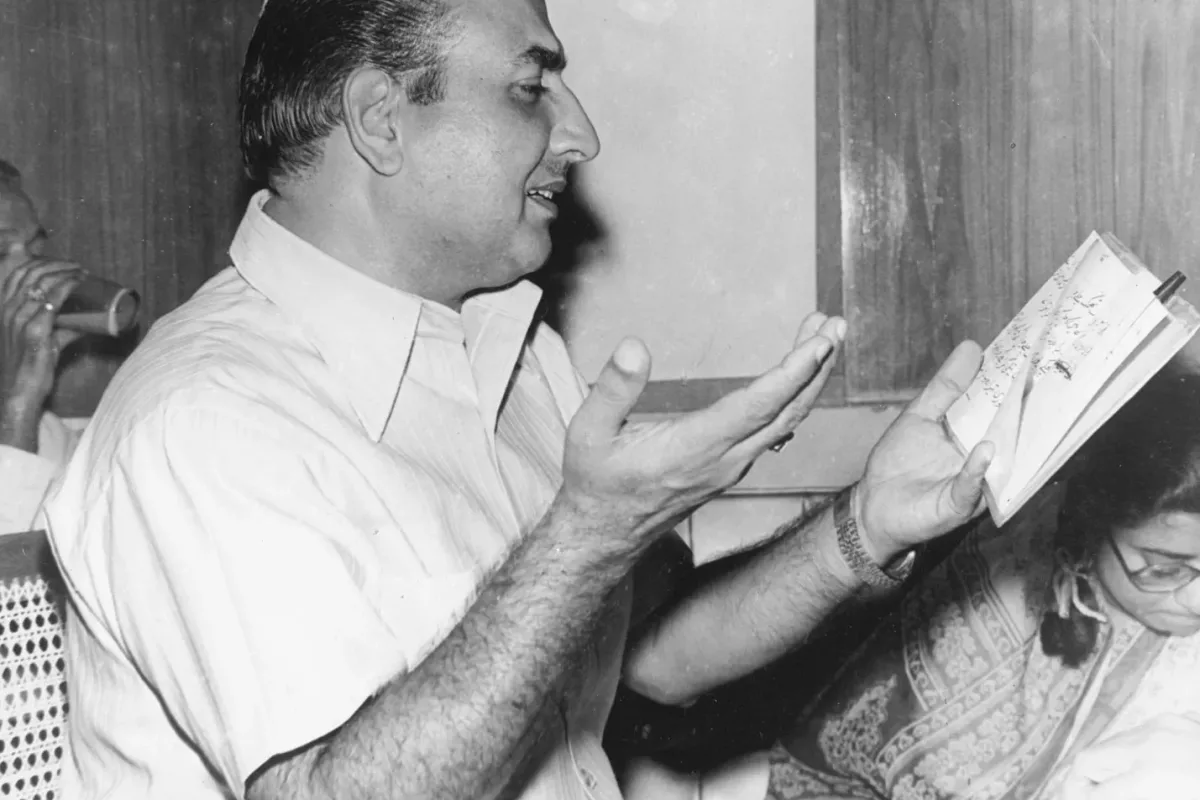
BY K V VENUGOPAL
Mohammad Rafi’s 101th Birth Anniversary
The well-known Bollywood playback singer Mohammad Rafi’s 101st birth anniversary falls on December 24 this year. The immortal voice mesmerises the music lovers without any time bound barrier. The late Bollywood singer, Lata Mangeskar, viewed as nighthingale of India was apt in her comment on peerless Rafi. “From classical to ghazal, Rafi Saheb had everything in his strides. Many singers would come and go, but he will be remembered forever.” Lata was perhaps right, as the voice of Rafi encompassed a tremendous range, which is unparalleled.

The peculiar trait that separates a playback singer from a classical vocalist is not the range or ability as a singer but the voice quality. With Rafi, it was the ultimate combination that helped him reign supreme in the field of playback singing.

The former Prime Minister Pandit Jawaharlal Nehru called Rafi as the magician of voice and was spellbound after hearing his “suno papuki amar kahani” following the assassination of Mahatma Gandhi, as tears rolled on his cheeks. Rafi was the most sought after singer in 1950s and 1960s. A section of music critics are of the opinion that in spite of possessing extraordinary melody, Rafi did not lose his manly voice. Fair enough, as another Bollywood playback singer and the mercurial genius Kishore Kumar opined, Rafi’s voice emanated from his heart, whereas other singers used to sing from their teeth.
Dilip Kumar: Rafi was my voice

As a matter of fact, Rafi’s voice ideally suited almost all the actors, including the superstars Rajesh Khanna and Amitabh Bacchan. They admitted that it was Rafi, who started singing some memorable songs for them in the initial stage of their career. The late Bollywood supremo, Dilip Kumar in an interview to a popular daily said “Rafi was my voice”. The ace-comedian Johnny Walker stopped acting, the moment he heard the demise of the popular singer and regretted “who is going to sing for me, the way I wanted like Rafi Saheb”. Even the composer R.D. Burman, an ardent admirer of Kishore’s unique style had opted for Rafi when it came to ‘Qaawali’.
His father and the well-known maestro Sachin Dev Burman rated Rafi ahead of other male singers. The yahoo fame Shammi Kapoor narrated how Rafi used to sing for him, exactly the way he preferred. In fact, Rafi sang more songs for Shammi than of other actors and the pair looked like an awe-some-two-some inspiration. Shammi rued that he could not be present in then Bombay when the singer died as he was in Kumba Mela and came to know about the demise when a stranger informed him that “aapka gala chalagaya”(your voice has gone). “Initially, I could not understand as my voice was alright, but the moment I was informed of the harsh reality, I wept like anything”, regretted the rock star hero, who was fondly remembered as Yahoo Shammi.
Mohammad Rafi: The Geet Samrat

For Dev Anand, though Kishore was his favourite singer, but admitted in his autobiography that as long as “Rafi-Lata duet ‘Abhina javo chodkar dil abhi bhara nahi’ in the Dev Anand-Sadhana starrer ‘Hum Dhono’ lingers in the minds of music lovers, romance will survive”. The late playback singer, Vani Jayaram, remarked in an exclusive interview to THE HINDU newspaper, “I have many favourites, but topping the list is Rafi Saheb”. Rafi was “Geet Samrat” and a Banyan tree”, film and sports critic Raju Bhartan of the now-defunt Illustrated Weekly would remind us often. The producer-director Manmohan Desai rated Rafi as a “Farishta”(a messenger of almighty). Pyarelal of the famous Laxmikant-Pyarelal duo revealed that a day prior to his death, Rafi bade a good bye to him after recording a song with, “Mein jaatahoon”, instead of leaving the sets under normal circumstances with, “Mein Aaatahoon. Little did we realise that it was going to be his last song”.

Pyarelal further recalled that the singer encouraged the duo by paying Rs 500 each, a huge amount in those days when they began their career in early 1960s and did not ask for them to return the money even after they attained the pinnacle. “He was like a fatherly figure for us,” says Pyarelal, while bursting into tears. The duo were candid in their utterances that they used to reserve the best songs for Rafi, despite the change in situation in early 1970s, as the Rajesh Khanna-Kishore Kumar pair became the talking point of the town and industry.
Rafi’s impact in South India

Rafi created a viable impact in South India, too, when N.T. Rama Rao, late matinee idol of Telugu films and the former Chief Minister of Andhra Pradesh had opted for Rafi’s majestic voice for his films. For instance, after witnessing the Hindi film ‘China Town’, Rama Rao wanted to imitate exactly like Shammi Kapoor in its Telugu remake. Though fate snatched Rafi at the age of 55, his discography exceeds 20,000 songs in 20 languages. Besides, the veteran composer Khayyam informed that Rafi had a large volume of non-filmy renderings. The popular composer O.P. Nayar could not dream of any other singer other than Rafi. His popularity dwindled after he dispensed with Rafi, following a misunderstanding with him on a trivial issue Another music director Ravi said can anyone forget Rafi’s memorable songs for Guru Dutt from ‘Pyasa’ to ‘Chandvika Chand’ and ‘Shahib, Bibi aur Gulam’?

The veteran composer Madan Mohan virtually had to fight with actor Rishi Kapoor for allowing him to use Rafi for the film ‘Laila Majnu’, as the late matinee idol wanted Kishore to sing for him. When the songs became super hits, Rishi himself wanted Rafi’s voice to be used for his subsequent films ‘Amar Akbar Antony’, ‘Hum Kisese Kam Nahin’ and ‘Sargam’, among others.
The yesteryear actors like Biswajit and Anil Dhawan admitted that Rafi’s voice gave them extra energy. There is no iota of doubt about it, as actors like Rajendra Kumar, known as “jubilee kumar” and Raj Kumar cannot be remembered without the voice of Rafi. Another notable singer Sonu Nigam said that his only favourite playback singer is none other than Rafi Saheb. The veteran actors Dharmendra and Jeetendra remarked that though many singers had sung for them, it was Rafi’s voice that matched them perfectly. Even Shashi Kapoor, whose career begain with Rafi, returned to him after a brief period with Kishore. However, a brief period of lull in his market did not dampen the spirits of Rafi, as he was confident enough to proclaim when Kishore was ruling the roost with, “shadow cannot erase the sun forever”, politely and without undermining the stuff of the ebullient singer.
Rafi and Lata

Rafi was an excellent human being too, and known for his magnanimity. Many a time, he had sung at free of cost For instance, in the film ‘Aap ke Deewane’, in which the actor Rakesh Roshan made his debut as a producer-director, Rafi sang the title song of the movie without charging a penny. Similarly, he had returned the money to the actor-producer Joy Mukherjee when his film, ‘Ham Saaya’ flopped at the box office. He had accepted a mere Re one from Kishore for his film, saying, “I will not charge from my co-singer”. It was quite unfortunate that Rafi and Lata fell out over the Royalty issue and did not sing together for three years, penned the veteran journalist and the former Union Minister, M.J. Akbar with utmost regrets. It was left to Dada Burman to bring them together.

Rafi, however, made it clear that, “if the actors are masters of acting, we singers are masters of singers”. He also gently reminded the Guinness Book of Records to amend their factual error with, “I have sung more songs than Ms Lata Mangeskar”, till he breathed his last on July 31, 1980. Rafi was trained under the maestro Ustad Ghulam Ali Khan and made his debut in the Punjabi film ‘Gul Baloch’ by rendering a duet with Zeenat Begum, ‘Soniye Ni Heeriye Ni’ composed by Shyam Sunder. Wadia Movietone owner, Homi Wadia, tapped his talent and made him sing for his film, ‘Sharbati Ankhen’ under the composition of Feroz Nizami. Rafi’s voice encompassed a tremendous range, which is unparalleled. The peculiar trait that separates a playback singer from a classical vocalist is not the range or ability, but the voice quality, according to the late composer, Naushad, who brought Rafi to the forefront. With Rafi, it was the ultimate combination that helped him reign supreme. His unsurpassed range stood him stand apart from his contemporaries.
The turning point for Rafi came in the year 1937

“A pan-India exhibition in Lahore featured a musical programme where popular singers of that time Kundan Lal Saigal and Zohra Bai Ambalewali were performing along with some new talents. Thousands of music lovers had turned up to listen to their favourites, including Rafi, who too, was a die-hard fan of Saigal. During the programme, the electricity went off. Without the loudspeaker, Saigal’s fans were unable to hear him sing and not surprisingly, grew restive. It was then that somebody sent Rafi up on stage. He grabbed the opportunity and the unknown singer became the man of the moment. The auditorium echoed with the crowd’s deafening applause. Patting young Rafi’s head appreciatively, Saigal said, “You are going to take my place”.
Rafi’s voice suited any genre of music be it a moving ghazal like ‘Aap Ke Pehloo Main Aakar Ro Diye’, a plaintive bhajan like ‘O Duniya Ke Rakhwale’, or a wild and whacky Shanker-Jaikishan composition like ‘Chahe Koi Mujhe Jungle Kahe’. He added his delectable nuances to the melody and made it spell-bound. Even Raj Kapoor, a Mukesh favourite could not resist the temptation of using him for the song “Bazi kisiki pyarme, beetejo arzoo” in his film ‘Nazrana’ and ‘Zindagi barna buleki tho barsath ki rath’ for the movie ‘Barsaat’. For instance, in the film ‘Mera Naam Joker’ for the song ‘Sadqe heer tujh pe hum faker sadqe’, Jaikishen of the composers Shankar-Jaikishan duo felt that though Mukesh had sung well, the song did not create an impact that they expected. The producer-director Raj Kapoor also had a similar opinion and reluctantly asked Jaikishan to compose the song with Rafi. The emotion that Rafi had displayed in this song was amazing. Though it was deleted from the movie later, keeping its length factor in mind, the old-timers would still recall this memorable song time and again.

Rafi’s son, ‘Shahid recalled how beautifully his father sang “Nenuladugayere” in Ganga Jamuna by not sacrificing the Bhojpuri accent. Lata regretted in her autobiography that she desperately wanted to sing the song “Madhubanki Radhika Nachere” in Kohinoor, but that was meant for the male actor and further averred as to how Rafi Saheb’s lovely voice emanated from the protruding neck of Dilip Kumar. The late Kollywood popular singer, S.P. Balasubramanian said Rafi saheb was like a god for him, as a large number of his songs made him cry. Another notable singer, Jesudas said that he was a fan of Rafi right from his childhood days and another talented singer, Unni Menon always finds delight in singing the evergreen Rafi number ‘Apke hasin par jo aaj naya noor hai’ from the film, ‘Aaye Din Bahar Ki’. The late Kollywood playback singers, T.M. Soundarrajan and P.B. Sreenivos adored him till their death.
Praises of Rafi Sahab
Many composers in the industry admit that it was only Rafi’s modulation, inflection, throw of voice, musical vision and incomparable versatility that allowed music directors to create three octave compositions. He virtually crooned for some songs. Rafi used to challenge music directors to compose such a tune that he could not sing. Imagine and choose any occasion, and you have Rafi’s number absolutely suiting it. Be it bhangra, ghazal, qawwali, romantic, lullaby, classical, folk and patriotic songs, playful numbers, bhajan and even the rare ‘rukshati’ song, the magic of his silken voice holds the listener in ethereal thrall. When a film producer asked Naushad to compose a particular song, the music director expressed his inability by saying that it is only possible for Rafi to come from his death to render justice to the song.
K.S.Ramachandran, who runs a website named, CHANDANRAFI.WEBS.COM in Chennai, says that he was floored and literally consumed by the voice of Rafi Saheb, after hearing his voice “Chal Udja Re Panchi” as a five-year-old boy from the movie ‘Bbhabhi’. The Kollywood actor, Y.G. Mahendra, an ardent admirer of Rafi, would reason that it was his unexplainable vocal cord that radiated invisible vibrations across humanity and the world at large. The music lovers are lucky that Rafi decided to remain in India after the riots occurred in late 40s. The millions of music lovers were indeed spoilt for choice when they looked at the great singer’s awe-inspiring repertoire. According to Naushad, Rafi’s voice mirrored the whole gamut of human emotions, namely, sorrow, romance, love, its pain, separation union, hatred, revenge, elation, patriotism and chutzpah, among others.
When Rafi Lost his Voice
In the early 1970s when Rafi lost his magical voice for a while, Naushad brought him to the fore with “e gala khuda ne diya, ek kharda ne khaise lega sakta hai.” (This voice was given to you by the Almighty, but how come a good for nothing fellow could snatch it from you). Some of Rafi’s Bengali songs like ‘Tumather Ashirwade’ for Durga Puja festival in West Bengal are popular even today. The music director Ravi said can anyone forget Rafi’s memorable songs for Guru Dutt from ‘Pyasa’ to ‘Chandnika Chand’ and ‘Shahib, Bibi aur Gulam’? The renowned composer Madan Mohan virtually had to fight with actor Rishi Kapoor to allow him to use Rafi for the film ‘Laila Majnu’, as the matinee idol wanted Kishore to sing for him. When the songs became super hits, Rishi himself wanted Rafi’s voice to be used for his subsequent films ‘Amar Akbar Antony’, ‘Hum Kisese Kam Nahin’ and ‘Sargam’. The late Tamil writer, Tamilvanan wrote that whenever he suffered from unbearable headache, he only listened to the songs of Rafi Saheb.
Rafi’s Last Recorded Song

The last song recorded by Rafi was for the film ‘Aas Paas’ on July 26, 1980 just five days before his death. It was a duet with Lata. Anand Bakshi’s lyrics were set to music by Laxmikant Pyarelal. The song ‘Shehr mein charcha hai, yeh duniya kahti hai’, has made the music lovers to indulge in nostalgia. The ‘Times of India’ wrote in is editorial that Rafi’s voice flowed like a tidal bore in the sea, as it looked like the voice emerging without the orchestra. Rafi was a perfectionist to the core and lent his immortal voice to songs in every possible genre of music. He had a distinct and clear advantage over other singers, as his diction was flawless and poetic. Rafi always lauded the performance of other singers. When the scribes praised him sky-high in a press conference, while thanking them, he made it known to them that he was always listening to the voice of Manna Dey.

Rafi never hesitated to appreciate the performances of Mukesh, Kishore and Mahendra Kapoor, among others. Interstingly, among his fans, Mukesh counted Rafi as one among them, and, more so, after hearing the song, ‘Din Dhal Jaye Raat Na Jaai” from the movie, ‘Guide’. Manna Da, known for his classical expertise, summed up about Rafi in a nutshell, “I was always scared of his voice quality and I simply worship him”. The ghazal maestro, Jagjit Singh, highlighted Rafi’s versatility and immense talents, time without number. Lata in an exclusive interview revealed that Kishore, while admiring his quality, was scared of his presence.