
 Snehashish roy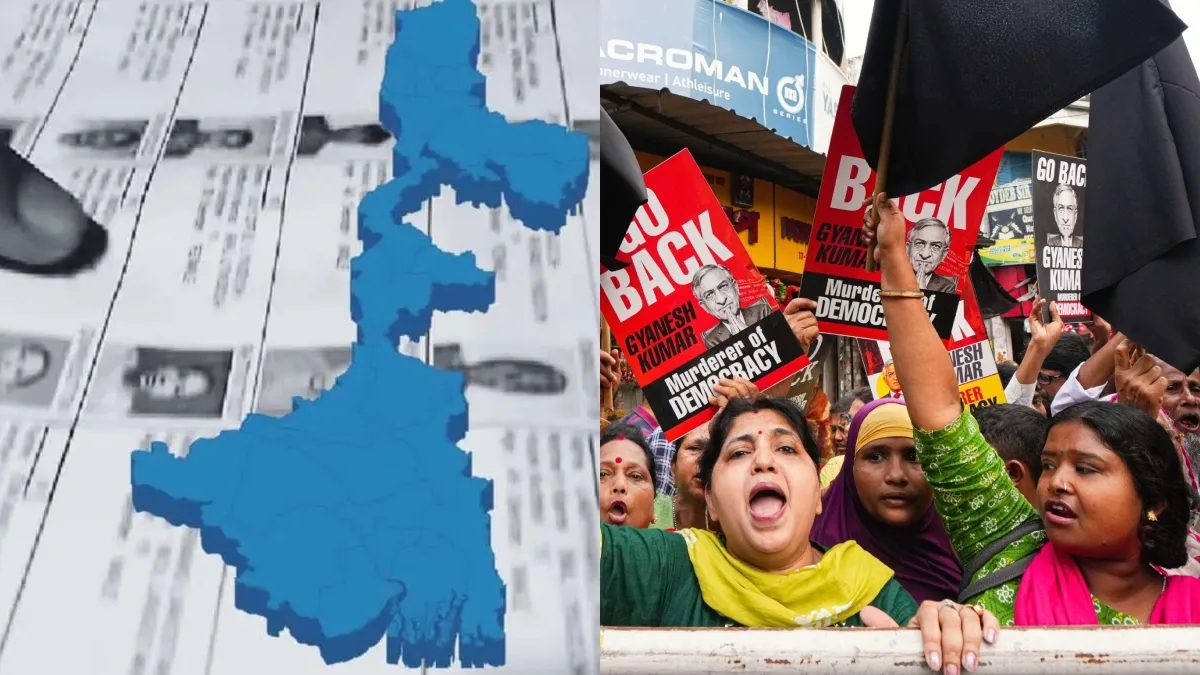
As West Bengal heads into one of the most politically charged Assembly elections in recent history, the Election Commission of India (ECI) has imposed a series of unusually stringent and highly specific rules—many of which appear unprecedented in their scope and concentration within a single state. From banning motorcycle movement and pillion riding to warning of repolls over even minor tampering with EVM buttons, Bengal has effectively become a laboratory for aggressive electoral regulation.
The ECI has mandated strict inspections of Electronic Voting Machines (EVMs), warning that even substances like glue, ink, or perfume on buttons would count as tampering and could lead to repolling. At the same time, it imposed restrictions on two-wheeler movement, including bans on pillion riding and night-time travel—measures rarely seen in other states. Additionally, dozens of constituencies have been classified as “expenditure sensitive,” with an unusually high deployment of observers.
Taken together, these measures suggest a pattern: Bengal is being policed more tightly than other poll-bound states like Tamil Nadu or Kerala.
The question, therefore, is unavoidable: does this signify a stronger commitment to free and fair elections—or does it introduce new forms of uncertainty and unevenness in the democratic process?
Constitutional Powers: The ECI’s Expansive Mandate
To understand the legitimacy of these actions, one must begin with the constitutional framework. Article 324 of the Constitution of India vests the ECI with the “superintendence, direction and control” of elections. This provision has historically been interpreted broadly by courts, allowing the Commission to act even in areas where specific legislation may be silent.
Additionally, the Representation of the People Act (RPA), 1950 and 1951, provides statutory backing for electoral roll management, conduct of elections, and enforcement mechanisms. These laws empower the ECI to take necessary steps to ensure free and fair elections, including deploying observers, regulating campaign practices, and maintaining law and order in coordination with state machinery.
In principle, therefore, the ECI is well within its authority to impose restrictions if it believes they are necessary to preserve electoral integrity.
But constitutional authority is only one side of the debate. The other is consistency.
Why Bengal? The Justification of “Exceptionalism”
The ECI’s implicit argument rests on the idea that Bengal is not an ordinary electoral terrain. Historically, the state has witnessed intense political violence, high levels of electoral competition, and allegations of voter intimidation. The classification of 55 constituencies as “expenditure sensitive” indicates concerns over money power and inducements influencing voters.
Similarly, restrictions on motorcycle movement are justified as preventive measures against the mobilisation of “toughs and miscreants” during elections.
From this perspective, Bengal’s exceptional regulatory treatment is not discriminatory but responsive—an attempt to address a uniquely volatile electoral environment.
However, this justification raises a critical issue: how does one define “exceptional” conditions, and who determines when they warrant extraordinary measures?
The Problem of Uneven Application
The core concern is not whether the ECI has the power to impose such rules—it clearly does. The concern is whether applying them disproportionately in one state undermines the principle of electoral uniformity.
Other poll-bound states like Tamil Nadu and Kerala also face issues of money power, localised violence, and political rivalry. Yet, they have not witnessed the same degree of micro-regulation in voter movement or campaign activity.
This creates a perception gap. If voters in Bengal are subject to restrictions that do not apply elsewhere, it risks fostering the belief that the electoral process itself is uneven.
In democratic systems, perception is often as important as reality. Even well-intentioned measures can appear suspect if they are not applied consistently.
When Regulation Becomes Disruption
Another dimension of the debate is the impact of these rules on ordinary voters.
The ban on motorcycle movement and pillion riding, for instance, directly affects daily life—particularly in rural and semi-urban areas where two-wheelers are a primary mode of transport. While exemptions exist, the sheer complexity of the rules creates confusion.
The rapid issuance and partial rollback of some directives further adds to this uncertainty.
Similarly, the strict interpretation of EVM tampering rules—where even minor physical alterations can trigger repolling—raises operational challenges. Polling staff must now navigate an extremely narrow margin for error, increasing the risk of procedural disruptions.
In effect, the attempt to ensure electoral purity may inadvertently create logistical chaos.
The Psychological Impact on the Electorate
Beyond logistical issues, these measures have a deeper psychological impact.
Frequent rule changes, heightened surveillance, and strict enforcement create an atmosphere of tension. Voters may begin to feel that the electoral process is overly controlled, even if the intent is to safeguard it.
This can lead to two contrasting outcomes: heightened vigilance among voters who feel the system is under threat, or disengagement among those who find the process overly complicated or intimidating.
In Bengal, where political participation is traditionally high, the former may dominate—but not without consequences.
Judicial Interventions and Institutional Checks
The judiciary has also played a role in shaping the discourse around the ECI’s actions. The Calcutta High Court, for instance, has emphasised that the Commission cannot bypass its own established rules, reinforcing the principle that even constitutional authorities must operate within procedural limits.
This introduces an important counterbalance. While the ECI enjoys wide powers, it is not above scrutiny. Judicial oversight ensures that its actions remain within the bounds of legality and proportionality.
However, frequent legal challenges also signal a lack of consensus around the Commission’s approach—something that can erode institutional confidence over time.
Free and Fair Elections: Strengthened or Strained?
At its core, the debate revolves around the meaning of “free and fair elections.”
The ECI’s actions can be seen as an attempt to strengthen fairness by eliminating malpractice, reducing intimidation, and ensuring transparency. Strict EVM checks, expenditure monitoring, and movement restrictions all align with this objective.
Yet, fairness is not only about preventing wrongdoing. It is also about ensuring equal treatment, clarity of rules, and minimal disruption to legitimate political and social activity.
When regulations become too intrusive or unevenly applied, they risk undermining the very fairness they seek to protect.
The Political Interpretation
Unsurprisingly, political parties have interpreted the ECI’s actions through their own lenses.
For the ruling party at the Centre, the measures are a necessary intervention to ensure clean elections in a historically volatile state. For the state’s ruling party, they are seen as excessive, targeted, and potentially disruptive.
This divergence reflects a broader trend in Indian politics, where institutional actions are increasingly viewed through partisan frameworks.
In such an environment, even neutral regulatory measures can become politically contested.
A Delicate Balance
The Bengal elections highlight a fundamental dilemma in democratic governance: how to balance strong oversight with minimal interference.
Too little regulation risks allowing malpractice to flourish. Too much regulation risks stifling legitimate activity and creating perceptions of bias.
The ECI’s Bengal-specific measures sit at this delicate intersection. They represent an attempt to err on the side of caution—but in doing so, they have opened up new questions about proportionality and consistency.
A Test Case for Indian Democracy
West Bengal’s 2026 elections may well become a defining moment for the Election Commission itself.
By imposing an unusually tight regulatory framework in a single state, the ECI has set a precedent—one that will likely influence how future elections are conducted in other parts of the country.
If the measures succeed in delivering a peaceful, credible election, they may be seen as a model for proactive intervention. But if they lead to confusion, controversy, or perceptions of bias, they could trigger calls for greater standardisation and restraint.
Ultimately, the legitimacy of an election does not rest solely on its rules, but on the public’s trust in those rules.
In Bengal, that trust is now being tested—not just between political parties, but between the electorate and the institutions that govern their democratic rights.