
 Snehashish roy
Musician Vishal Dadlani has set off a fresh debate around election procedures after saying that the indelible ink applied to his finger at a polling booth faded just hours after he cast his vote. His revelation came as he took to social media to share a candid observation, prompting widespread public discussion about the effectiveness of indelible ink in Indian elections and the broader questions of voter confidence and polling integrity.
India’s voting process traditionally involves marking each voter’s finger with indelible ink at the polling station. The ink is intended to serve as a visible sign that a person has already voted, preventing individuals from voting multiple times. As the name suggests, it is supposed to last for a significant period, typically several days, until it wears off naturally. For generations, the ink has served as both a procedural safeguard and a symbol of civic participation.
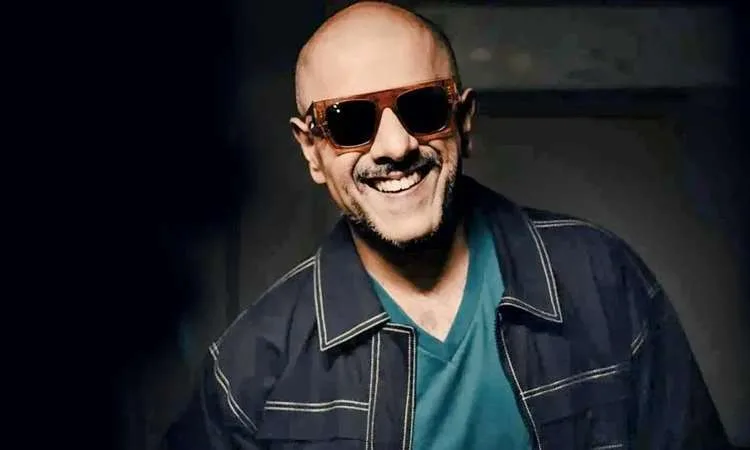
Dadlani, who is known for being outspoken on social and political issues, shared his experience online after noticing the mark on his finger had faded to near invisibility not long after he had left the polling station. He described his surprise and disappointment, questioning whether the indelible ink was functioning as intended. “I went to vote, got inked, and a few hours later the mark was barely visible,” he wrote, capturing the attention of followers who are increasingly sensitive to questions of electoral probity.

View this post on Instagram
The moment sparked a lively response across social media platforms, with users exchanging views on the reliability of indelible ink as an anti-fraud measure. Some agreed that if the ink faded quickly, it raised concerns about potential misuse or loss of confidence in the voting process. Others were more sceptical about the significance of one person’s anecdote, suggesting that lighting, camera angles or personal routine might affect how visible the mark appears later in the day.
Election officials and civic experts have long maintained that indelible ink is a practical deterrent against double voting, particularly in large elections with high turnout. The physical mark, often placed on the left index finger, is not the only safeguard; voter lists, identification checks and electronic voting machines each play a role in maintaining the integrity of the process. Nonetheless, indelible ink remains one of the most recognisable symbols of voting participation in India and is deeply embedded in public consciousness.

Some commentators on social media used Dadlani’s comment as an entry point to discuss broader electoral reforms, urging improvements to voter education, logistical transparency and technology in polling. Others pointed out that a fading mark, while noteworthy, does not directly equate to systemic failure and that isolated instances should be approached with caution before drawing larger conclusions.
Critics of the viral discussion urged users not to overinterpret a single personal experience. They noted that individual variations, such as the type of ink used at specific booths, how long a voter’s hand was exposed to water or friction, or how quickly one’s skin naturally exfoliates, can influence how long the mark remains visible. Several voters shared their own experiences, with mixed reports: some said their ink lasted for multiple days, while others admitted it faded sooner than expected.

The topic also tapped into a perennial conversation in Indian civic life about how best to preserve the sanctity of the vote in a country with a vast electorate. Election Commission authorities have repeatedly defended their procedures as robust, while also acknowledging that reinforcing voter awareness and trust is an ongoing endeavour.
Vishal Dadlani’s honesty in sharing the moment resonated with many, prompting conversations well beyond the entertainment industry. Whether the discussion leads to any procedural review or simply fuels online debate remains unclear, but it has undeniably put a spotlight on a mundane but symbolically important aspect of India’s democratic process.