
 Snehashish roy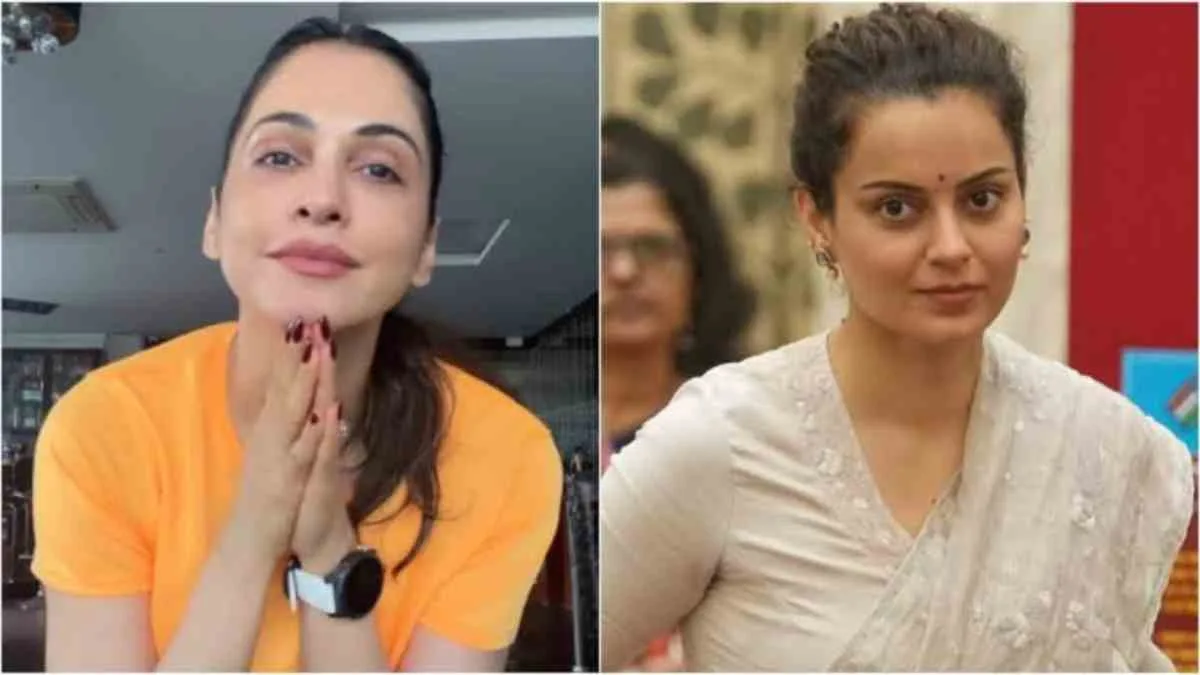
Actor and BJP MP Kangana Ranaut has backed actor Isha Koppikar after the latter described herself as a proud “andhbhakt”, saying her devotion was to India rather than any political party. Ranaut responded by recalling instances from her own life when she claimed to have protested against injustice, including against a teacher who allegedly hit children with a stick.
Koppikar had shared a video on Instagram in which she addressed the term “andhbhakt”, which is commonly used to describe an unquestioning supporter of a political leader or party. She said she was willing to embrace the label if it meant being devoted to her country.
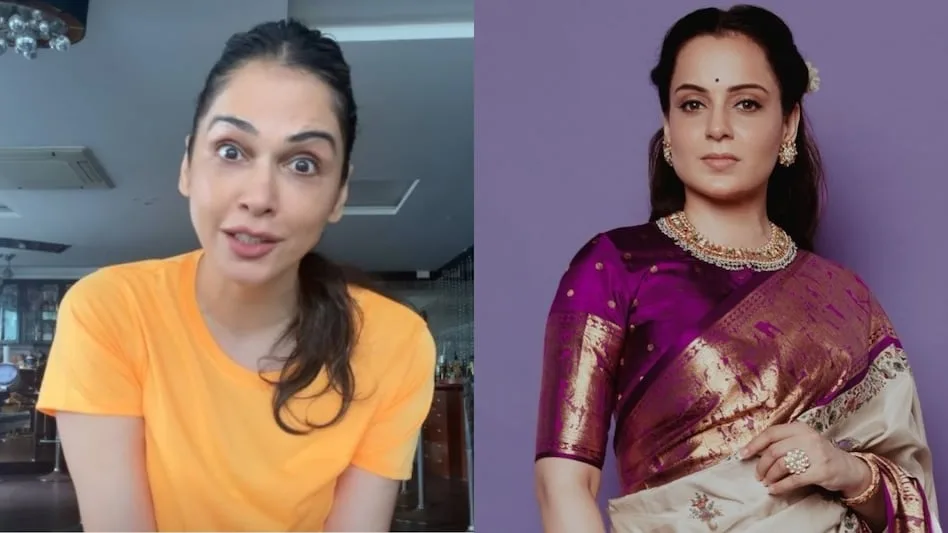
The actor clarified that her “blind devotion” was not towards any political party. Instead, she said it was directed towards India and that she could love the country while still questioning the government and disagreeing with its policies.
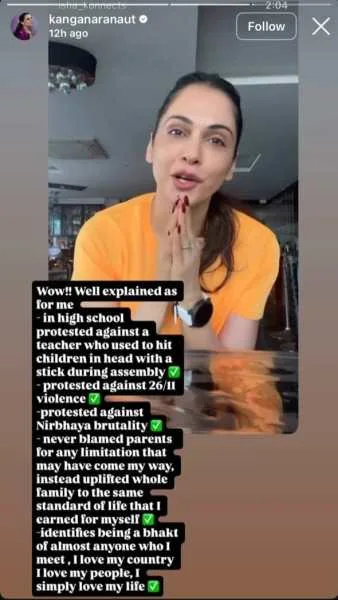
Kangana subsequently shared Koppikar’s video on her Instagram Stories and expressed support for her argument. The actor-politician recalled several occasions when she said she had stood up against what she considered wrong.
“High school protested against a teacher who used to hit children in head with stick during assembly,” Kangana wrote, referring to an incident from her school years. She also mentioned protesting against the 26/11 Mumbai terror attacks and the brutality surrounding the Nirbhaya case.
Kangana went on to say that she had never blamed her parents for limitations she may have faced in life. Instead, she claimed that she worked to improve the circumstances of her entire family after achieving success herself.

She also described herself as someone who could be a “bhakt” of almost anyone she met, explaining that her affection was rooted in her love for the country and its people.
The exchange comes amid a larger political and cultural debate over patriotism, criticism of governments and the use of the word “bhakt” in Indian political discourse. Koppikar’s statement attempted to separate patriotism from political allegiance, while Kangana’s response highlighted her own history of speaking out against issues she considers unjust.
Kangana’s comments are also significant because she has herself been at the centre of a recent controversy over her remarks about the Gen Z protests at Jantar Mantar.
Last month, the BJP MP criticised some protesters involved in demonstrations over the NEET-UG paper leak controversy. She described some of them as “Generation Gutter” and objected to what she characterised as crude language and behaviour during the protests. Her remarks attracted considerable criticism, with opponents accusing her of insulting an entire generation.
Kangana subsequently clarified that she was not referring to Gen Z as a whole. She argued that her comments were directed at specific people or women involved in the protests and maintained that she did not intend to make a blanket statement about India’s youth.
She later reiterated that position while responding to criticism over her use of the words “cockroaches” and “gutter”. According to Kangana, she was referring to protesters who had themselves used the term “cockroaches”, rather than describing all young people in those terms.
Her latest comments about Koppikar therefore come against the backdrop of her own recent arguments over protest, dissent and patriotism. By recalling her school protest and other public tragedies, Kangana appears to be presenting her political position as one that allows for both patriotism and opposition to wrongdoing.
Koppikar made a similar distinction in her video. While declaring herself proud to be an “andhbhakt”, she said citizens could question governments and disagree with their policies while continuing to love their country.