
 Snehashish roy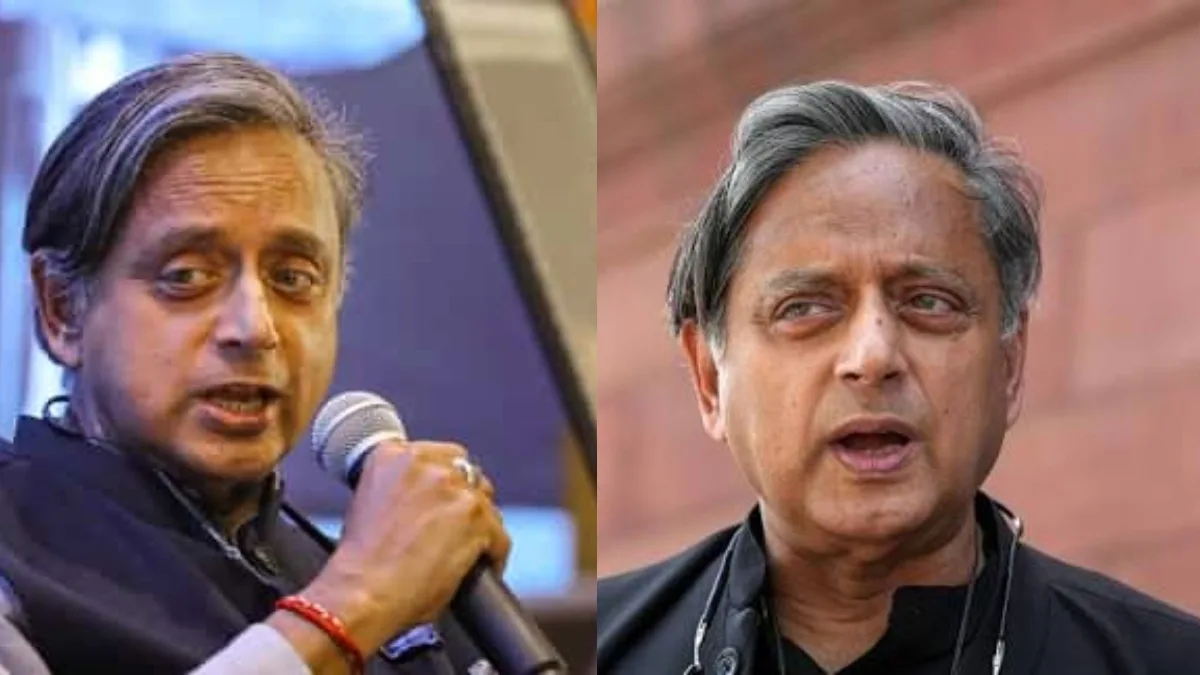
Shashi Tharoor’s public persona has long blended cosmopolitan erudition with a Congress badge, but in recent months he has stood out not merely for his eloquence but for a pattern: frequent public positions that dovetail with, or are amicable to, BJP positions, even while he remains formally within the Congress fold. That paradox, a senior Opposition MP who frequently agrees with or offers useful suggestions to the ruling side in public, is producing both political utility for the BJP and political discomfort for his own party. To understand what’s happening, we need to look at three things: the substance of Tharoor’s cross-party nods, how he manages party loyalty while breaking with collective opposition lines and historical parallels, most notably with Subramanian Swamy, who long ago built a reputation as an idiosyncratic dissent within a larger political family.
Tharoor’s more recent, high-visibility interventions are small in form but large in optics. After the Lucknow T20 was abandoned because of fog, he publicly urged BCCI officials, including Rajeev Shukla, who is close to political circles, to schedule winter matches in the south to avoid smog-related washouts. It was a practical suggestion with a bipartisan cast: a constituency-friendly, non-ideological fix that implicitly criticised northern organisers and, by extension, administrative complacency. The short exchange and the framing made national headlines and was immediately fed into political narratives.
That episode is emblematic: Tharoor advances sensible, technocratic fixes and, in doing so, avoids the ritual of automatic opposition. On foreign policy and national-security items such as Operation Sindoor, he has at times lent the government rhetorical space or joined delegations that the BJP has actively promoted, moves that the ruling side is quick to highlight as proof of cross-party validation of its decisions. Those gestures, whether tactical or principled, make useful soundbites for the BJP, which can point to a prominent Congress voice as an implicit endorsement.
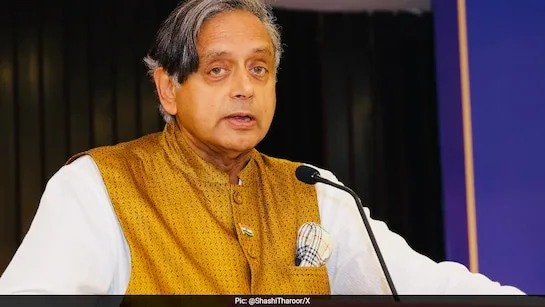
Why does Tharoor do this, and how does he remain in the Congress? For one, he has cultivated an image of an independent intellectual parliamentarian rather than a pure party functionary. That personal brand gives him latitude to speak from first principles, often liberal, internationalist and expert-led, even if departmental or strategic politics runs in the opposite direction. Second, Tharoor’s approach arguably aims to reclaim the space of reasoned public argument from the polarising theatricality of contemporary politics: public policy should be about problem-solving, not posture. The logic appeals to urban, opinionated voters and to media platforms that reward nuance. But it also leaves him vulnerable to charges of disloyalty from within his own party.
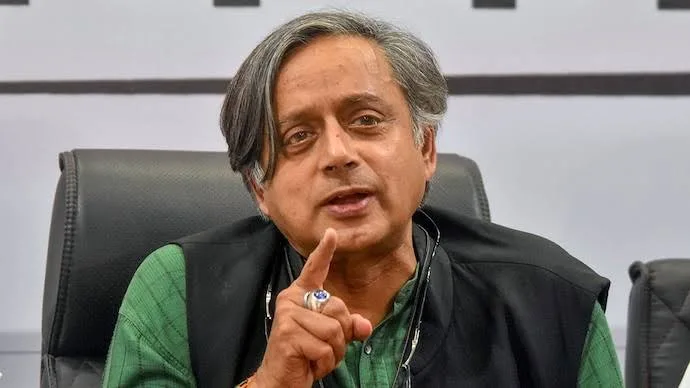
Congress reactions have been predictable: irritation and, occasionally, public distancing. Party colleagues sometimes frame Tharoor’s departures as vanity or as politically naive concessions that help the BJP’s narratives. That tension underscores a structural reality of modern party politics, a centralised party discipline versus a media-driven premium on visible, individualistic interventions. Tharoor sits uneasily at that fault line, choosing visibility over tight party messaging in moments he judges important.
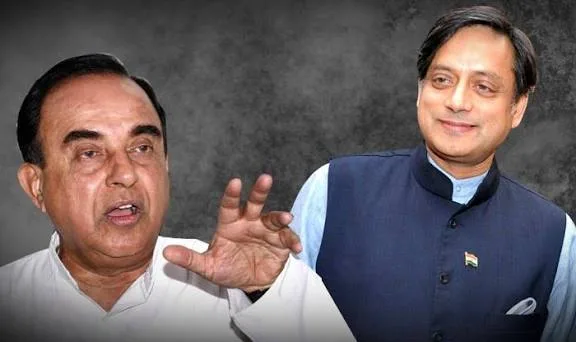
The comparison with Subramanian Swamy is instructive. Swamy, an ideologue and litigant who migrated through different party homes before landing in the BJP, made a career out of being useful to power while cultivating personal independence. He repeatedly voiced opinions at odds with party leadership or strategic alliances, yet found ways to be politically consequential. The parallel is not exact, Swamy is ideologically embedded in the right; Tharoor remains rooted in the Congress’s ethos, but both men demonstrate how individual stature, intellectual capital and media fluency can let a politician operate semi-autonomously inside a larger party. Swamy’s trajectory shows the political upside (media attention, policy influence) and the costs (estrangement, being used as a foil) of outlier behaviour.
What are the consequences? For Tharoor, the immediate payoff is amplified relevance: when the government can claim a respected Opposition voice agrees with some policy or critique, the rhetorical battlefield shifts. For Congress, the cost is coherence; internal discipline and a unified counter-narrative are harder to sustain when prominent members publicly diverge. For public discourse, there is both gain and loss: gains in that arguments can be cross-cutting and policy-focused; losses in that partisan clarity and collective accountability may fray.
Ultimately, Tharoor’s trajectory is a reminder that contemporary Indian politics prizes the visible lone voice. That can be a corrective to robotic party lines. But it can also be co-opted: a single dissenting or agreeing voice can be paraded as cross-party consensus even when it is not. The political skill, and ethical test, for Tharoor will be whether his occasional agreements with the BJP strengthen public policy while preserving meaningful dissent and accountability back home in the Congress. If he manages that balancing act, he can be more than a useful soundbite for the ruling party; if he fails, he risks becoming an unwitting amplifier of policies he cannot shape.