
 Himshikha Shukla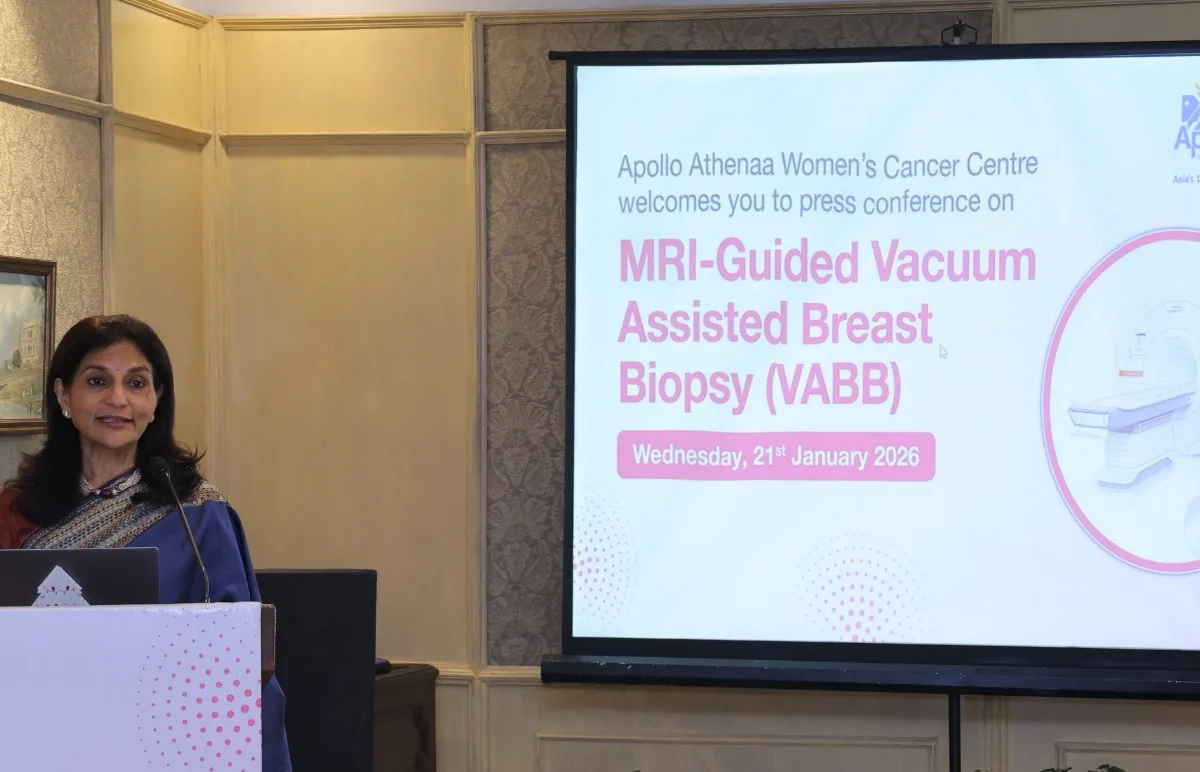
Apollo Athenaa Women’s Cancer Centre is leading a shift towards earlier and more accurate breast cancer diagnosis through MRI-Guided Vacuum-Assisted Breast Biopsy (MRI-Guided VABB). This specialised, expertise-led, minimally invasive diagnostic technique allows doctors to identify and confirm breast cancer at early stage often at Stage 0 and Stage 1, when it is still small, symptom-free, and highly treatable.
Studies indicate 10-20% cancers can be missed on mammograms and this number can further increase in dense breast. These undetected cancers often continue to grow silently without a lump, without symptoms, and beyond the reach of conventional screening tools. This challenge is especially significant in India, where younger women are increasingly being diagnosed with aggressive breast cancer often nearly a decade earlier than women in Western countries. Unfortunately, many of these cancers are still detected at advanced stages, when treatment becomes more aggressive, less effective with poorer outcomes.
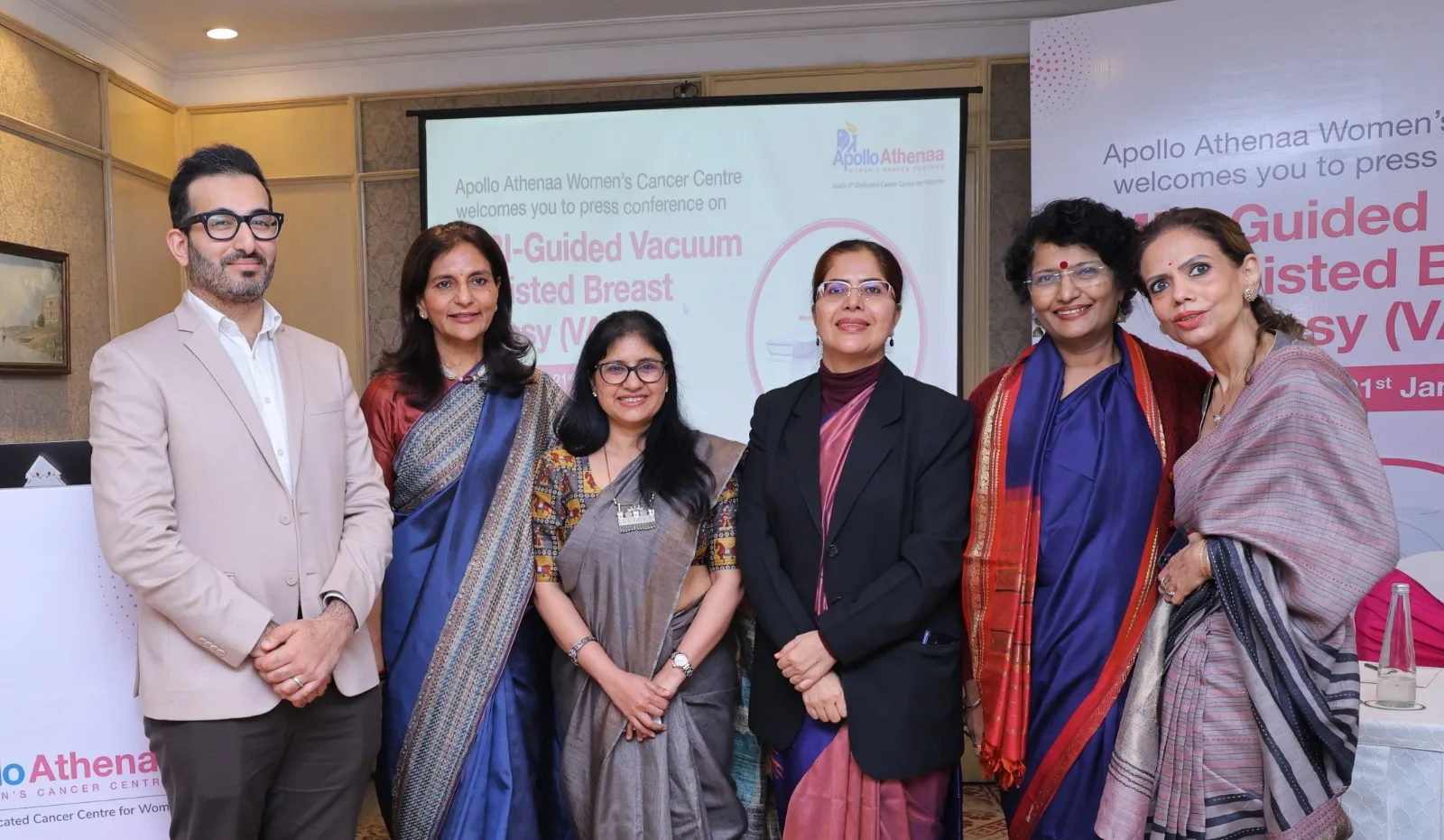
Dr. Preetha Reddy, Executive Vice Chairperson, Apollo Hospitals Group, said, “At Apollo Athenaa, Asia’s first dedicated Women’s Cancer Centre, the launch of advanced MRI-Guided Vacuum-Assisted Breast Biopsy (MRI-Guided VABB) marks a transformative leap in women’s cancer care. This initiative strengthens the entire breast diagnostic pathway with greater precision, speed and clinical confidence, helping detect breast cancer earlier and enabling timely, minimally invasive intervention. Above all, it reflects our commitment to give every woman the best chance for excellent outcomes, greater reassurance, and the ability to move forward with confidence and dignity.”
Using high-resolution MRI systems supported by latest AI-based protocols, Apollo Athenaa has also reduced breast MRI scan time from nearly 50 minutes to less than 15 minutes, without compromising image quality or diagnostic confidence so that more females with dense breasts or high risk can undergo screening with breast MRI, the most sensitive technique to pick any breast abnormality.
“Early detection saves lives,” said Dr. Jyoti Arora, Senior Consultant and Lead, Department of Breast Radiology, Apollo Athenaa Women’s Cancer Centre, one of the most experienced clinicians in the country in MRI-Guided Vacuum-Assisted Breast Biopsy, having performed over 600 VABB procedures over the course of her career.
“Young women often have dense breasts, which makes cancer harder to detect through routine screening. These cancers also tend to be more aggressive. What worsens outcomes, however, is delayed diagnosis. MRI-Guided VABB enables us to detect and confirm breast cancer- often at Stage 0 – before it becomes life-altering.”
Breast cancer remains the most common cancer among Indian women, accounting for nearly 27–28% of all female cancers (ICMR–NCDIR), and the burden is expected to rise sharply. By 2050, India is projected to see a 170.5% increase in new breast cancer cases and a 200.5% rise in deaths, with a growing incidence among younger women underscoring the urgent need for more effective and accurate pathways to diagnose cancers early. While mammography remains an important tool, its effectiveness is significantly reduced in women with dense breast tissue, which is common among younger women.
The impact of this approach is already evident. A 70-year-old woman recently presented with bloody nipple discharge, a known warning sign of early breast cancer. Yet her mammogram and ultrasound were completely normal. In many such cases, patients are advised observation and asked to return after six months, risking progression of a potentially malignant lesion. Instead, at Apollo Athenaa, she underwent ‘MRI-Guided VABB’, which revealed Stage 0 breast cancer (DCIS) a cancer invisible to conventional tests. She received timely surgery at the earliest possible stage, with excellent prognosis.
“This is what true early detection looks like,” Dr. Arora added.
“Without MRI-Guided VABB, this cancer could have progressed silently. With it, we were able to intervene before it changed her life.”