
 Snehashish roy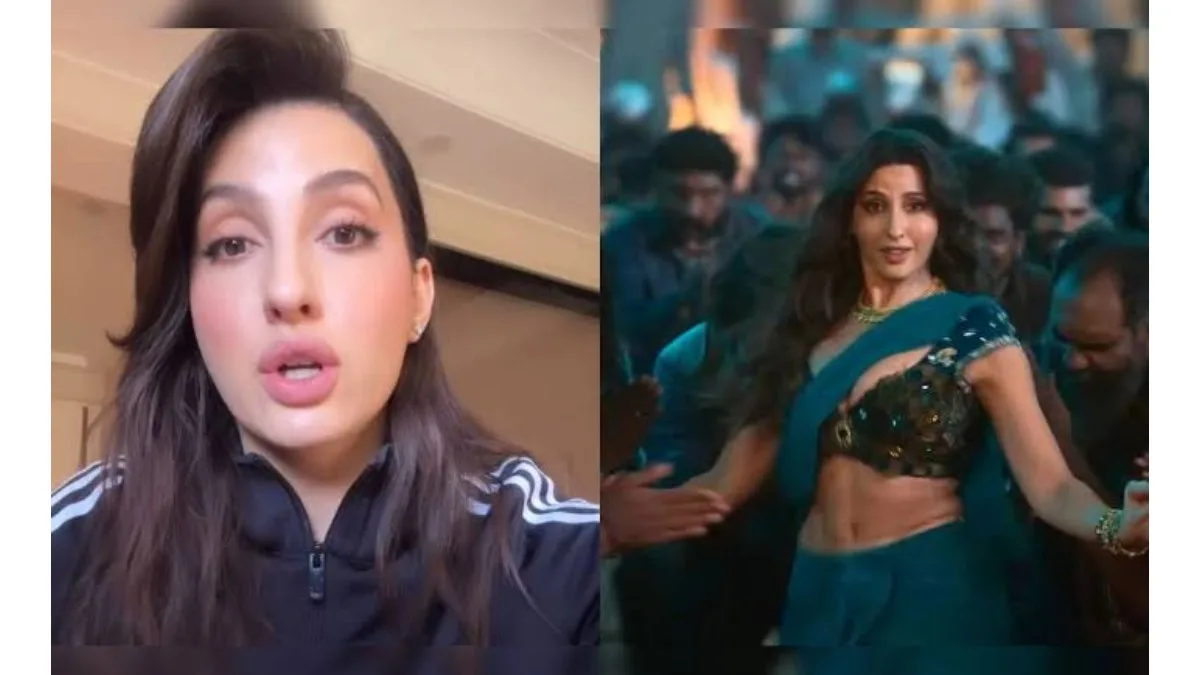
Nora Fatehi has made a fresh allegation about the controversy surrounding Sarke Chunar Teri Sarke, claiming that some influencers were paid to amplify criticism of the song and target her amid the backlash. The actor-dancer said she was not surprised by the online reaction and claimed she already knew the “script” being followed by some of those criticising her.
Speaking on the Dream with Dr Sheen podcast, Nora said she had developed a “thick skin” over the years and was not panicking when the controversy erupted.

“I already know who hired you, when, and how much they paid you,” she said, suggesting that the criticism from some influencers had been orchestrated. She added that whoever was behind it had “squeezed” an opportunity out of the controversy.
Nora, however, did not publicly identify the alleged influencers, the person or organisation she believes hired them, or provide publicly verifiable evidence of payments. Her claim should therefore be treated as an allegation rather than an established fact.
The controversy centres on Sarke Chunar Teri Sarke, the Hindi version of a song from KD: The Devil, featuring Nora alongside Sanjay Dutt.

The song faced significant criticism over its lyrics, visuals and choreography after snippets and promotional material appeared online. Critics accused the track of being vulgar and sexually suggestive, while the controversy eventually attracted complaints and regulatory scrutiny.
Nora has previously insisted that she did not approve the Hindi version.

According to her, she had originally shot the song in Kannada around three years ago. She said she does not understand Kannada and therefore relied on the filmmakers’ explanation of the song when agreeing to perform in it.
When the material was subsequently adapted into Hindi, however, she said she immediately realised that the lyrics and presentation could create controversy.
“I knew it would get backlash,” she said, adding that she had told the director that what had been done was “not okay”.
Nora has maintained that the Hindi lyrics were not something she had approved.
She said the Hindi adaptation was created without her knowledge and that she had not given permission for her image to be used in that particular version.
She also claimed that she did not promote the Hindi song after becoming aware of it and told the director that her “image and reputation” were at stake.

The actor said she became particularly uncomfortable after seeing the promotional material at the song’s launch. She objected to what she described as unflattering photographs and an AI-generated image featuring herself and Sanjay Dutt.
According to Nora, she raised her concerns with the makers but initially chose to remain calm rather than create a public confrontation.
Nora eventually released a video explaining her position after the controversy intensified.
She said there were multiple narratives circulating about her involvement and that she felt compelled to respond because her silence could be interpreted as an endorsement.
The actor reiterated that she had not shot the Hindi version and did not know about the Hindi lyrics before they emerged online. She also asked people not to continue sharing the controversial material because doing so would give the song additional publicity.
Nora further complained that some people were using the controversy as an opportunity to attack her character rather than focus on the actual issue surrounding the song.
The backlash eventually led to the Hindi version being taken down.
Nora said she was grateful that pressure surrounding the controversy ultimately resulted in the filmmakers removing it. She argued that artists often have limited control over how their performances, photographs and likenesses are subsequently used, particularly when projects involve different industries and languages.
The controversy was not limited to social media. Complaints were filed alleging that the song contained vulgar and sexually suggestive material. The National Commission for Women also took suo motu cognisance of media reports concerning alleged obscenity and vulgarity in the song.
Nora’s latest comments raise a separate issue from the debate over the song itself: how much control does an actor actually retain over their image after completing a film project?
Her account suggests that she believes the Hindi adaptation fundamentally changed the context in which her performance was originally filmed. She has argued that she agreed to the Kannada song years ago but did not consent to the later Hindi version, its lyrics or some of the promotional imagery.