
 Himshikha Shukla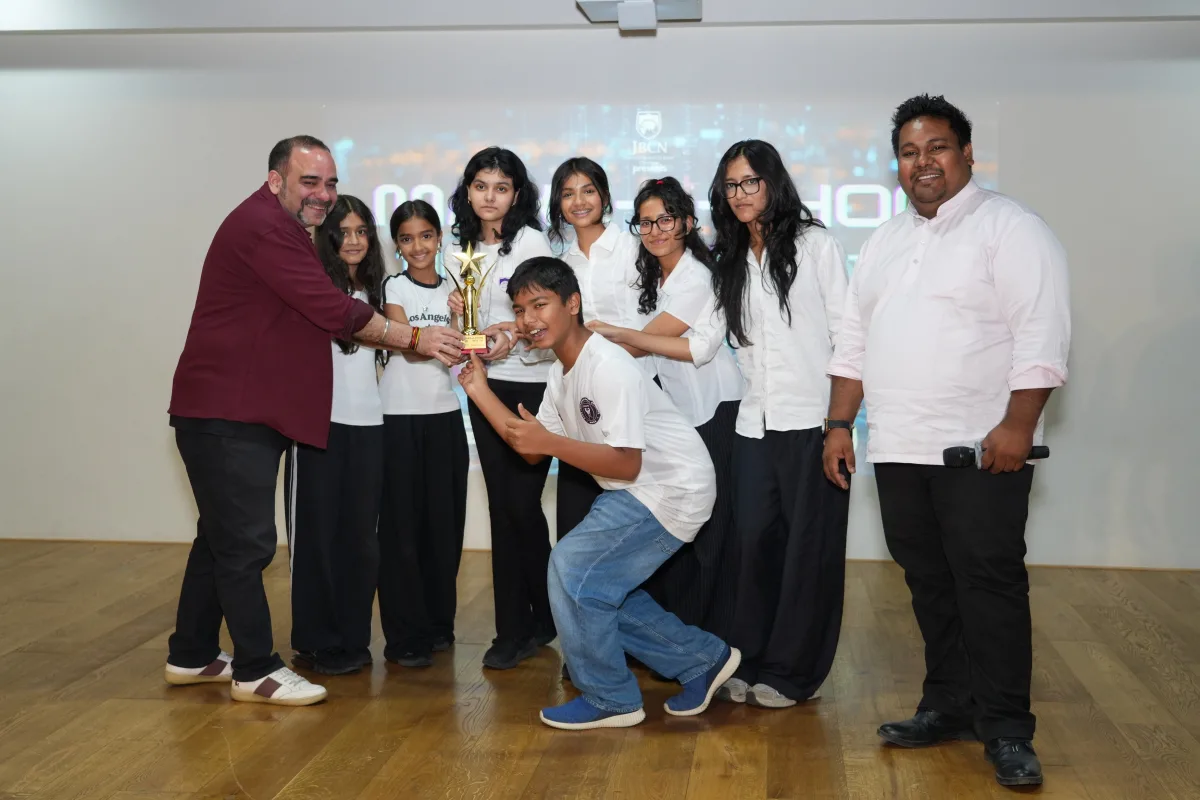
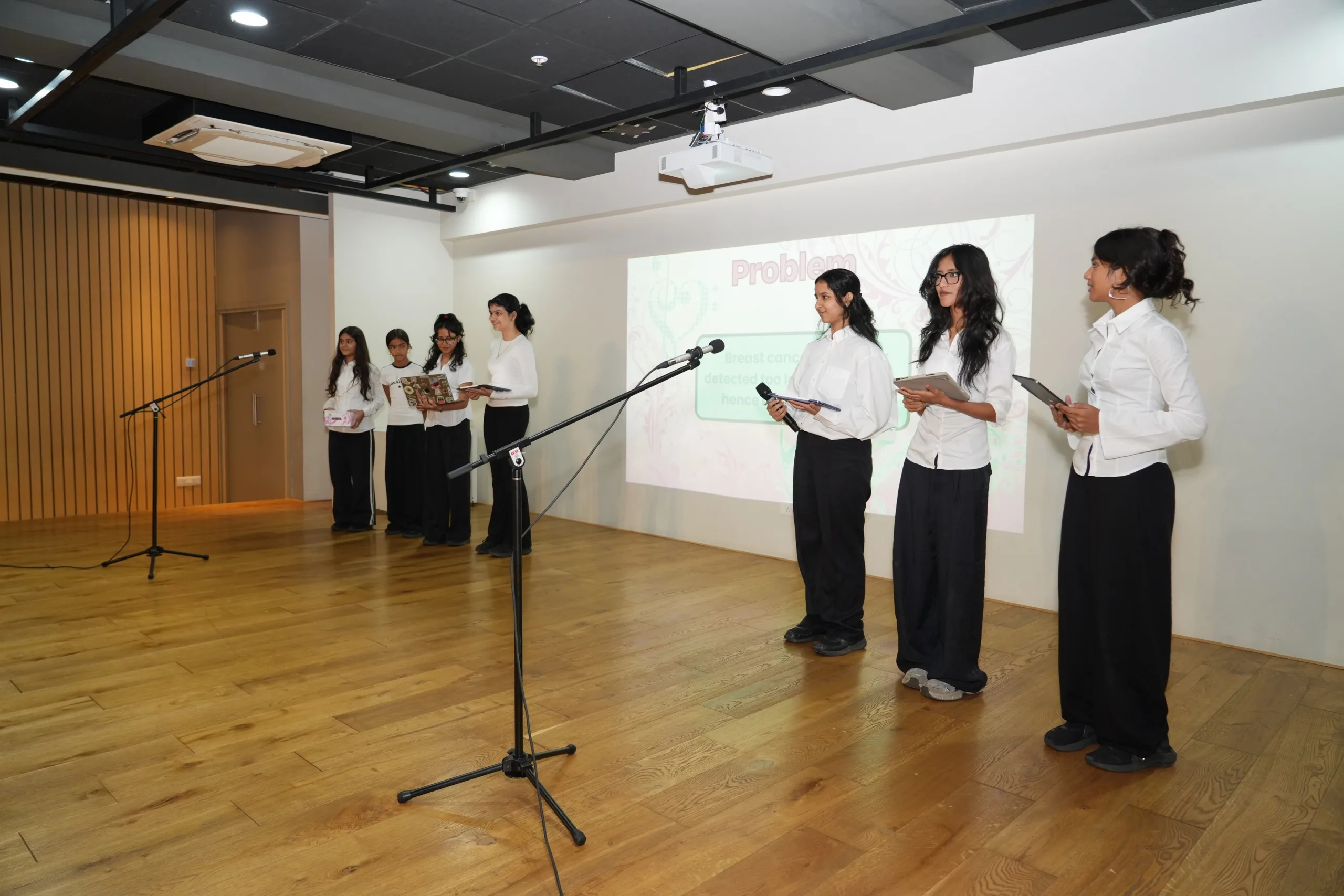
Innovation often begins with curiosity, and sometimes, it has the power to address some of the world’s most pressing challenges. At the Makeathon hosted by JBCN International School, a group of students developed Evara, a project exploring a non-invasive approach to breast cancer detection through tear-based analysis. Designed to encourage conversations around accessible screening and early detection, the initiative reflects how young innovators are combining science, empathy, and technology to create meaningful impact. In this conversation with Woman’s Era, the students behind Evara share the inspiration, research, challenges, and vision that shaped their remarkable project.
- Breast cancer is a topic that many students may not typically engage with at your age. What inspired your team to focus on this issue, and how did the idea for Evara first emerge?
We know so little about women’s health. Historically, women have always been underrepresented in medical research, even though they make up half of the world’s population. So, insights into various conditions and findings about medications have often been extrapolated from men and applied to women. But women’s bodies are different from men’s, with unique organs, genes, and hormones. Which is why we wanted to make a meaningful difference in women’s health.
We also aimed to focus on breast cancer in particular. A study in Lancet Oncology found breast cancer to be a leading cause of mortality and morbidity in women globally. India registered a staggering 477% increase in breast cancer cases and 352% increase in deaths caused by the condition between 1990 and 2023. One of the primary reasons is that breast cancer is often detected too late in patients, increasing the risks. So, we wanted to create a diagnostic test that could help women detect breast cancer early on.
Also, India is a country where social stigma and taboos exist when it comes to women’s reproductive health, adding another layer of obstacles to accessing testing for such conditions.
This led to the creation of Evara – a diagnostic test that not only helps in early detection of breast cancer but is also simple, accessible and sustainable. Women can use the test from the comfort of their own homes.
- Can you explain how Evara works in simple terms and what makes tear-based analysis an interesting avenue for early breast cancer detection?
Evara is a five-minute diagnostic test that helps test for early detection of breast cancer with 85% accuracy.
The idea was to create a simpler, more accessible, and non-invasive screening method that can help you identify early warning signs before the condition progresses to critical stages. Which is why we took the tear-based analysis approach.
Tears are filtered directly from blood plasma, and can detect conditions like Parkinson’s, Alzheimer’s and cancer. There are two proteins found in tear fluid: S100A8, a calcium-and-zinc binding protein and S100A9, a calcium binding protein that is heavily involved in regulating immune responses, cell cycle progression, and inflammation. In breast cancer patients, S100A8 is up to 7.8x higher, while S100A9 is up to 10.2x higher.
Evara employs the ELISA test (Enzyme-Linked Immunosorbent Assay). It’s a highly sensitive laboratory test to detect and measure specific substances such as antibodies, antigens, or hormones, in bodily fluids. The scanner measures the intensity of these proteins in the tear fluid.
All they have to do is this:
- Place the strip in the inner corner of their eyes and close them.
- Wait 5 minutes for the tears to absorb into the strip. Don’t force any tears.
- After 5 minutes, remove the strip. Put it into a test tube and one drop of test solution.
- Within 5-7 days, the lab result will be shared via Evara’s website. The scale is low, medium or high-risk.
Made from banana fibre, it is also sustainable. It is advisable to seek doctor’s consultation after receiving the diagnosis report.
- Developing a healthcare-related innovation requires extensive research and responsibility. What were some of the biggest challenges you faced while conceptualising and building this project?
There is a certain responsibility that comes with working on a healthcare-related idea. So, to begin with, we spent a lot of time researching existing screening methods, the importance of early detection, and how non-invasive diagnostics are being explored globally.
Since our concept involved tear-based analysis, we had to think through questions of accuracy, accessibility, user comfort, hygiene, sustainability, and how such a kit could be responsibly developed in the future.
While building this project, one of our biggest learnings was balancing scientific curiosity with sensitivity and responsibility. It also taught us that innovation is not only about technology, but also about empathy. We wanted Evara to be an example of the possibility of making healthcare less intimidating and more accessible, especially for early awareness.
- Beyond the scientific aspect, Evara addresses awareness and accessibility. Why do you think it is important to make conversations around breast cancer screening more approachable and stigma-free?
Evara was developed so that women across geographical, social, and economic boundaries can get access to early screening. While we are solving the accessibility part, awareness also becomes an important aspect of this project.
Government data shows that the breast cancer cases rose from about 2.13 lakhs in 2021 to 2.4 lakhs in 2025. The current data highlights that more than 57% of cases are diagnosed at late stages.
Many factors are responsible for these numbers. First and foremost are cultural taboos that deter women from discussing breast cancer-related problems with their loved ones. Another reason is uneven accessibility to screening facilities.
We feel that one of the biggest challenges is the gap between awareness and early diagnosis. So, when Evara was conceived, we considered the accessibility divide, sustainability, and stigma that plagues women’s minds when it comes to breast cancer.
By creating a test that can be done within the comfort and privacy of their homes and making it available through different channels, we made the process easier. It is our attempt to make screenings feel less intimidating and more like a quiet, dignified act of self-care.
- How has working on this project changed your understanding of healthcare, innovation, and the role young people can play in solving real-world problems?
Before working on Evara, our collective thought was that healthcare innovations are limited in labs and boardrooms and are done by experts after understanding the gravity of the problem. But this project changed that perception completely.
We started researching the problem, and the numbers really made us sit up and think. There are many women around us who are grappling with this problem right now. So, we then had to ask ourselves how a group of students can do their bit to make early testing possible for a real-world challenge that impacts millions globally.
The question then pushed us further into understanding protein biomarkers, ELISA testing, creating sustainable supply chains, markup price, etc. What we realised is that healthcare innovation is not an isolated discipline. It takes into consideration science, economics, design, empathy, and all of these factors work together simultaneously.
We are really grateful to Makeathon for providing us a platform to co-create solutions to a real issue, and helping us build Evara that could actually create an impact. For us, this opportunity brought a shift in our thinking, changing our roles from mere observers to active participants. And perhaps, that’s one of the most everlasting things Evara gave us.
- Looking ahead, what are your aspirations for Evara, and what message would you like to share with other students who want to use innovation to create social impact?
We would like to take Evara from prototype to pilot now. Possibly partnering with gynecologists, women’s health camps, improving detection accuracy, and eventually enabling our product to reach the hands of women from urban to the most remote areas. We have already worked on the affordability and sustainability aspects. Now, our long-term goal remains for Evara to be as accessible and socially normalised as any healthcare facility.
Beyond the product, our message to students is that the problem closest to you is the one you are very likely positioned to solve. What you require is inquisitiveness, persistence, and a willingness to be wrong multiple times before arriving at the right results.
Young people in India are already innovating across various fields. We are not waiting to grow up before engaging with the world’s problems. Enough people are already waiting for the right opportunity and time. We say begin now, begin small, and let the problem be your guide towards the solution.