
 Snehashish roy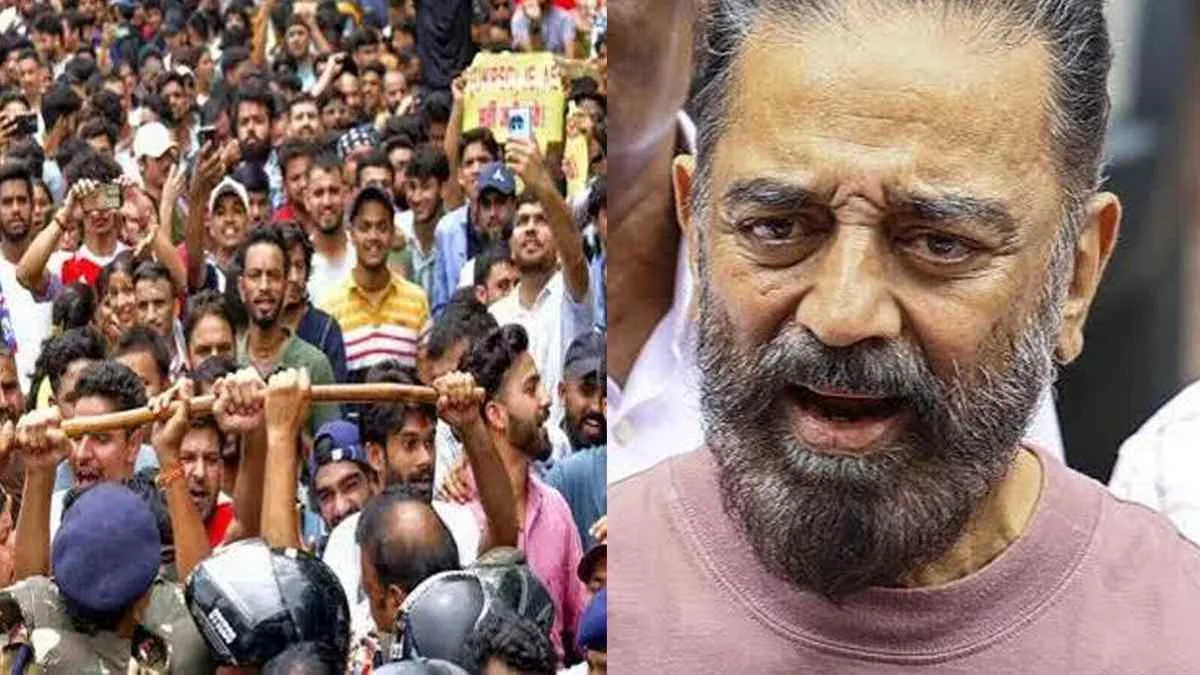
Actor-politician Kamal Haasan has welcomed the Centre’s willingness to engage with representatives of the student movement, calling dialogue the most constructive way forward amid the nationwide protests over alleged irregularities in competitive examinations. While reiterating his support for the students’ demands, Haasan said the government’s decision to open channels of communication was a positive step that should lead to meaningful reforms rather than remaining a symbolic gesture.
Taking to social media, the veteran actor said every democratic society must create space for conversations with its youth, particularly when their concerns revolve around education and the future of the country. He noted that the willingness to engage with students reflected an opportunity to rebuild trust, urging both sides to approach the discussions with sincerity and a commitment to finding lasting solutions.

Haasan’s remarks come after the government initiated discussions with leaders of the Cockroach Janata Party (CJP), the student-led organisation spearheading protests over the alleged NEET paper leak and broader concerns about transparency in India’s examination system. The talks followed weeks of demonstrations across the country, including the “Sansad Chalo” march in Delhi, where clashes between protesters and police drew widespread attention and criticism.
The actor stressed that conversations should not merely focus on immediate demands but also address the structural issues that have repeatedly shaken students’ confidence in the examination process. According to him, restoring faith in public institutions requires long-term reforms that ensure fairness, accountability and equal opportunity for every aspirant.
Haasan also referred to the emotional toll the controversy has taken on students and their families. He remarked that the nation had failed to act when the first warning signs emerged, saying that authorities should have listened when individual students first raised concerns instead of waiting for the issue to escalate into a nationwide movement. He urged policymakers to treat the current moment as a wake-up call for comprehensive education reforms.
In his message, the actor appealed to education reformer Sonam Wangchuk to prioritise his health after weeks of fasting. Acknowledging Wangchuk’s efforts in bringing national attention to the issue, Haasan said his objective of amplifying students’ voices had been achieved and hoped the activist would now allow the dialogue process to move forward. Wangchuk recently ended his 26-day hunger strike after receiving assurances from the government regarding discussions on key demands and protection for protesters.

The protests have emerged as one of the biggest youth-led movements in recent years, with students demanding greater accountability over examination irregularities, stronger safeguards against paper leaks and systemic reforms in the education sector. While Prime Minister Narendra Modi has announced measures including fast-track courts for paper leak cases and promised stricter action against those responsible, protesters continue to press for broader institutional changes and the resignation of Union Education Minister Dharmendra Pradhan.
Haasan joins a growing list of film personalities who have commented on the issue. Celebrities including Salman Khan, Dia Mirza, Riteish Deshmukh, Genelia Deshmukh, Anupam Kher, Naseeruddin Shah and Ayesha Khan have expressed solidarity with students or urged the government to address their concerns through dialogue rather than confrontation. Their interventions have helped keep the movement in the public spotlight as discussions continue between student leaders and government representatives.
On the professional front, Haasan continues to balance his political responsibilities with his film career. The veteran actor is awaiting the release of his upcoming projects while remaining active in public life through his political party, Makkal Needhi Maiam. His latest statement reflects a consistent emphasis on institutional reform and democratic engagement, arguing that genuine conversations with students are essential to restoring confidence in India’s education system.