
 Snehashish roy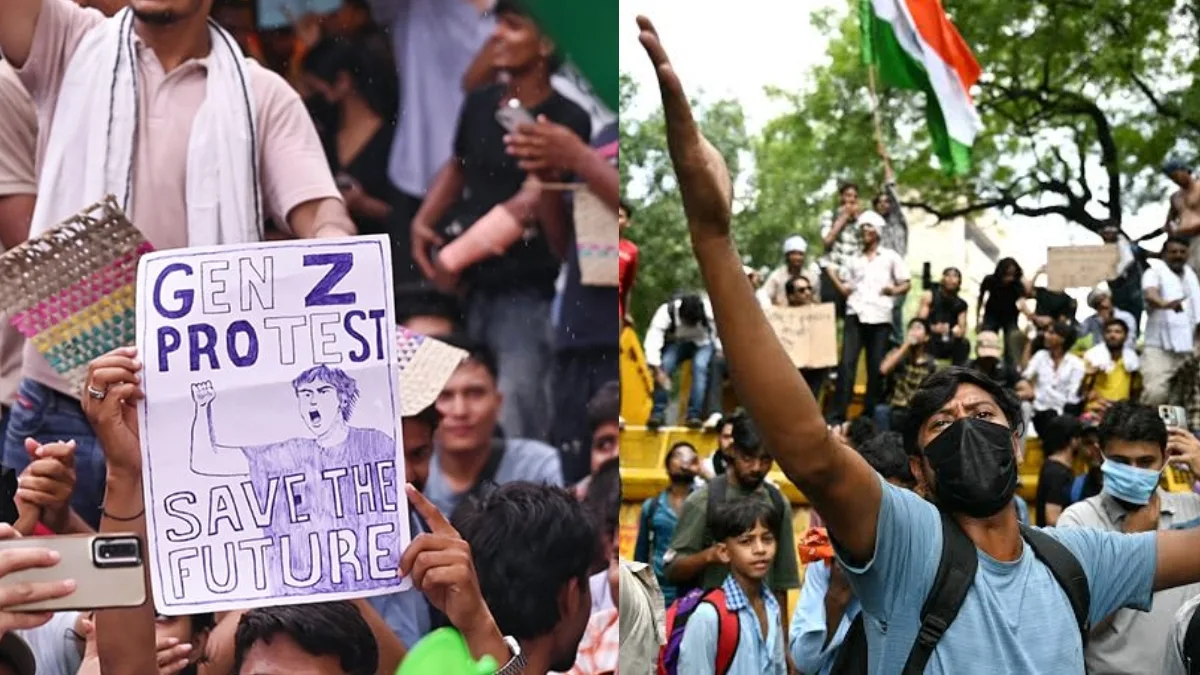
For over a decade, the Bharatiya Janata Party (BJP) has mastered India’s political grammar. Elections revolved around nationalism, identity, welfare delivery and the towering image of Prime Minister Narendra Modi. Opposition parties struggled to find an issue that could cut across religion, caste and regional divides.
It was not an opposition leader who eventually did. It was students.
The student-led protests that erupted over alleged examination irregularities have evolved into something much larger than a movement against paper leaks. They have exposed a generational shift in Indian politics—one where governance, opportunity and institutional credibility matter as much as ideology. The government’s eventual concessions, including the resignation of Education Minister Dharmendra Pradhan and the announcement of sweeping examination reforms, underline the political weight the movement acquired.
A governance issue became a political movement
Every government faces protests. What made this movement unusual was its origin.
Unlike previous agitations centred on identity politics, reservation or religion, this one revolved around merit and fairness. Students were not demanding subsidies or ideological change. They were asking whether years of preparation could be nullified by corruption in the examination system.
That question resonated beyond campuses.
Parents, professionals and the urban middle class—groups often seen as politically cautious—identified with the movement because almost every Indian family has experienced the pressures of competitive examinations.
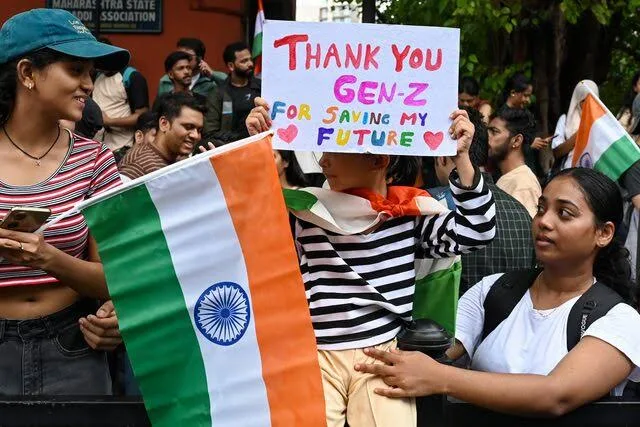
In doing so, the protests transformed what appeared to be an administrative failure into a broader test of political accountability.
The BJP’s familiar playbook found limited traction
The BJP has historically succeeded in reframing political debates around nationalism, cultural identity or opposition politics.
This time, that strategy proved more difficult.
An exam paper leak cannot easily be blamed on ideological opponents or foreign conspiracies. Students demanding transparent examinations are difficult to portray as anti-national. Even international observers noted that the movement’s focus on education and governance limited the effectiveness of conventional political counter-narratives.
The protesters also consciously projected themselves as patriotic rather than partisan, making it harder to dismiss them through familiar political labels.
India’s Gen Z is politically different
Much has been written about Gen Z being politically apathetic.
The protests challenged that assumption.
This generation is deeply digital but not disconnected. It consumes politics through Instagram reels, YouTube creators and memes as much as newspapers. Ironically, the movement itself embraced the derogatory “cockroach” label and transformed it into a symbol of resilience and collective identity.
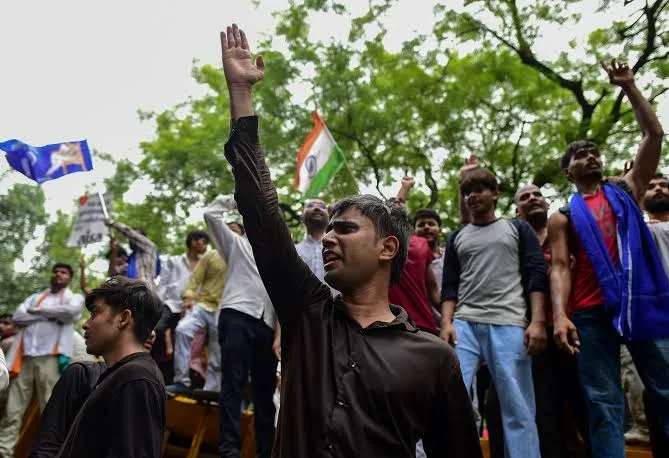
That ability to weaponise humour while sustaining disciplined mobilisation reflects a new political culture—one shaped less by party structures and more by networked communities.
Observers have compared India’s movement with youth-led mobilisations in Bangladesh, Kenya and Serbia, where social media accelerated leaderless but highly coordinated protests.
Not just a Gen Z story
There is, however, a temptation to romanticise the movement as a purely Gen Z revolution.
That overlooks an important reality.
As several commentators have argued, successful movements rarely emerge overnight. They are built on years of accumulated frustration, institutional distrust and earlier waves of activism. Millennials, parents and civil society organisations created much of the ecosystem within which today’s students could organise so effectively.
The visible faces may belong to Gen Z, but the social foundations extend across generations.
A warning—and an opportunity—for the BJP
The BJP remains India’s dominant political force.
Yet the protests reveal an emerging vulnerability.
Young Indians increasingly evaluate governments not only through ideology but through performance. Employment, education, examinations and institutional competence are becoming politically decisive issues for a generation entering adulthood amid economic uncertainty.
That explains why the government ultimately chose negotiation over confrontation and announced reforms rather than relying solely on policing.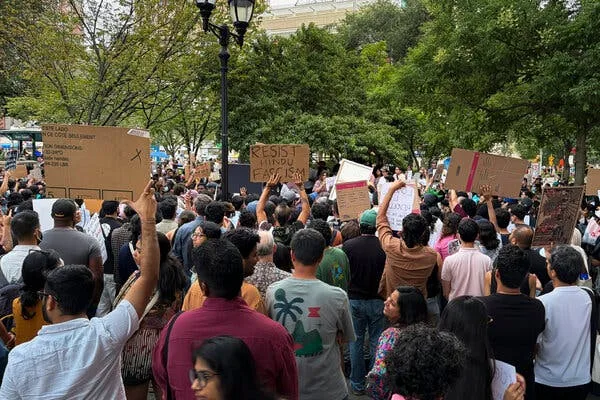
Whether these reforms satisfy students will determine whether this moment becomes a temporary disruption or the beginning of a longer political realignment.
The politics of aspiration
Perhaps the most significant lesson from the protests is that India’s political conversation may be entering a new phase.
For decades, identity has dominated electoral politics.
Generation Z is introducing another axis: aspiration.
This generation has grown up believing education is the pathway to mobility. When that pathway appears compromised, the reaction is not merely emotional—it is existential.
The examination crisis therefore became more than an education issue. It became a referendum on whether India’s institutions can still reward merit fairly.
That is why these protests matter beyond the resignation of a minister or amendments to examination laws.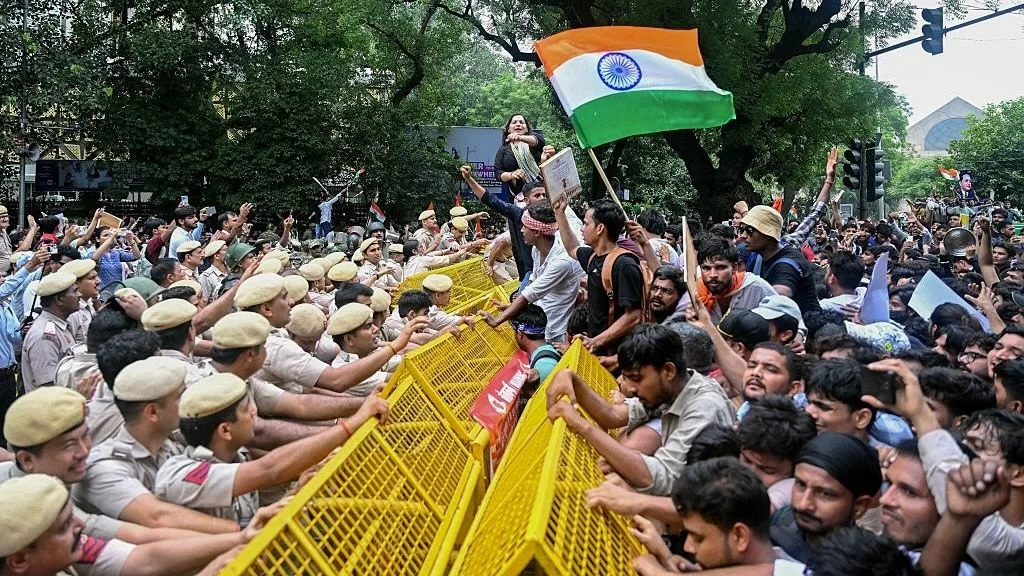
They suggest that India’s youngest voters may increasingly judge governments by competence as much as conviction.
If that shift endures, it could redefine Indian politics long after the placards have disappeared from Jantar Mantar.